
Horses of Hoofprint Bay: Beginner Guide: Your First Days
Learn horse care, training, competition preparation, and stable management, with clear differences between the demos and full game.
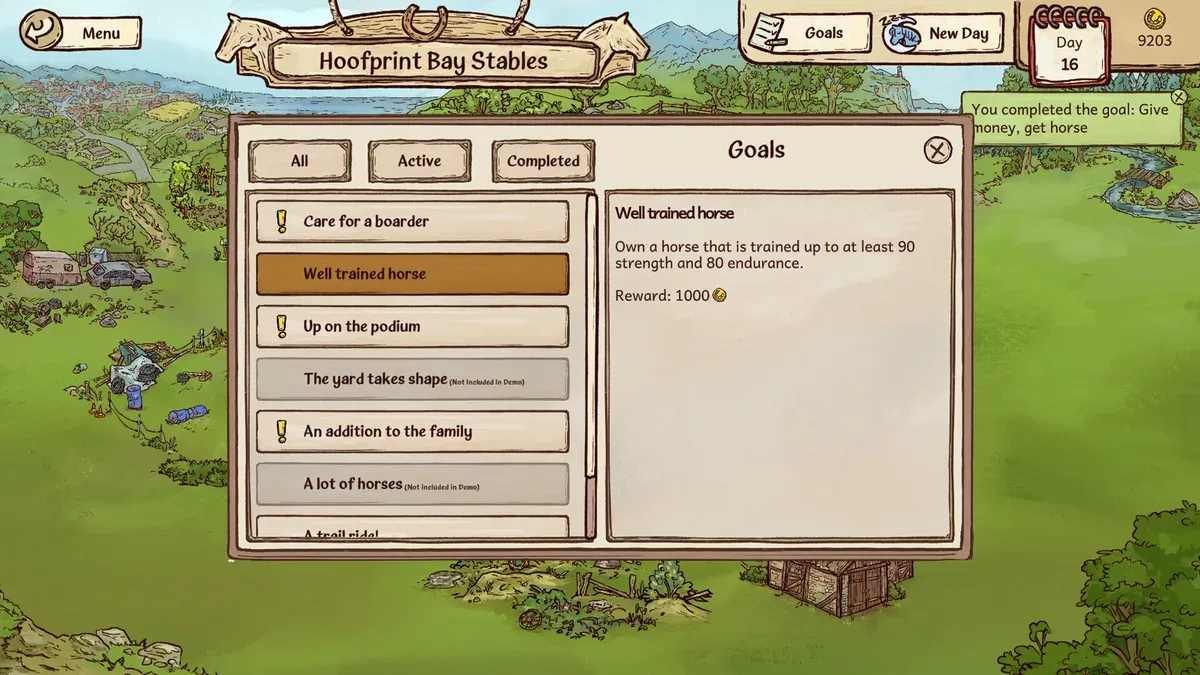
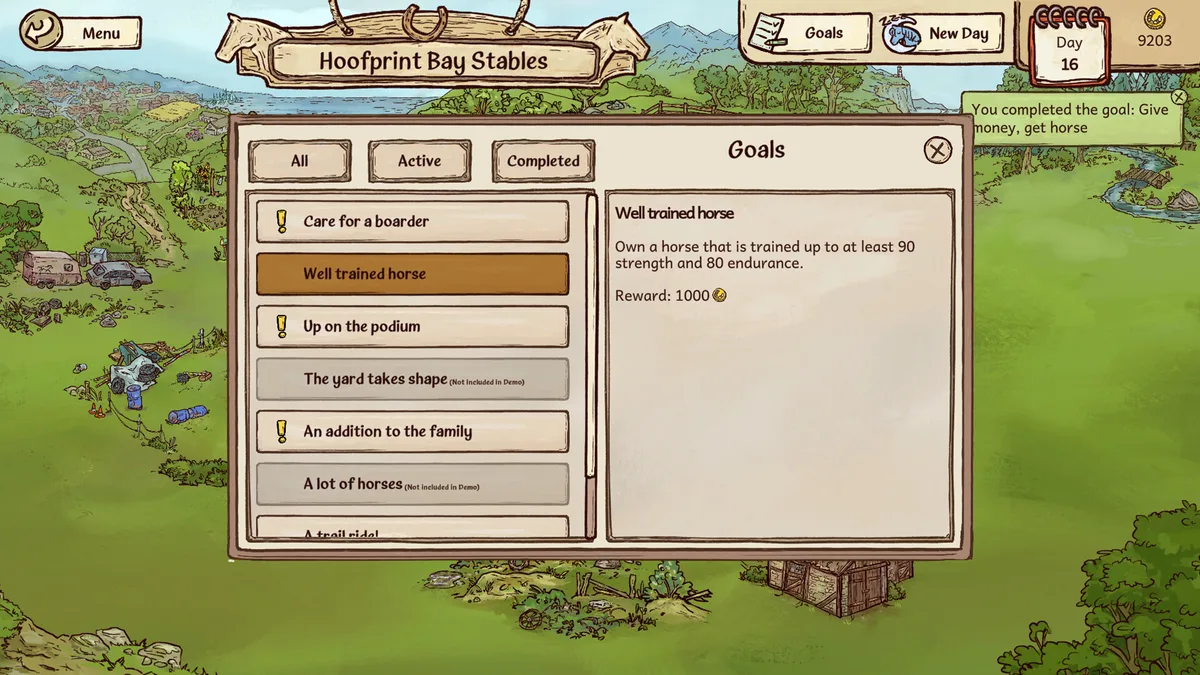
Image: official Steam catalog screenshot. Source: verified Steam listing.
Watch the related YouTube video: Horses of Hoofprint Bay – OUT NOW — thogli studios.
Official launch trailer used as general reference for the full game. It is not a dedicated tutorial, device benchmark, or proof of an individual mechanic.
Horses of Hoofprint Bay beginner guide: your first priorities
Your first horse gives you plenty to learn before you need a bigger stable. This Horses of Hoofprint Bay beginner guide explains how care, training, and competitions connect, helping you make useful decisions with your starting mare. Follow this beginner guide to establish a manageable routine and understand what to work toward next.
The global Steam PC full release launched on November 4, 2026, according to the official Horses of Hoofprint Bay Steam listing. This guide was prepared from the linked official sources on November 5, 2026, rather than firsthand playtesting. Older development descriptions are identified where relevant.
You begin with a modest property, a run-down stable, and your mare. The central progression loop connects caring for horses, improving their abilities, competing for prize money, and developing your facilities. Breeding and staff management become additional considerations as your operation grows.
For your opening session, use these priorities as a flexible sequence:
| Priority | What to focus on | Why it matters |
|---|---|---|
| Horse care | Grooming, hoof cleaning, and injuries | Care helps prevent health problems |
| Training | Exercises that develop strength and confidence | Training prepares horses for competitions |
| Competition preparation | Matching your ambitions to your horse’s abilities | Competitions offer prize money |
| Stable management | Understanding building upgrades and staff | Expansion creates more care and training responsibilities |
These are suggested priorities, not a timed walkthrough. The cited sources do not establish a required opening purchase order, a guaranteed first victory, or a fixed number of sessions needed to qualify.
Returning from the February demo requires another adjustment. The October demo announcement explains that its starter has substantially lower stats and more closely reflects the full-game opening. Expect the rebalanced start to progress more gradually than the February version. An old demonstration of rapid advancement is therefore a poor benchmark for your first session.
Make horse care your first dependable routine
The care advice in this beginner guide starts with a simple habit: check your horse’s condition before deciding what to attempt next. The official description gives grooming and hoof care practical consequences, so learning those interactions belongs alongside learning to ride.
| Care task | Confirmed purpose | Beginner takeaway |
|---|---|---|
| Brushing and grooming | Helps prevent saddle sores | Make cleanliness part of your preparation |
| Using the hoof pick | Helps prevent abscesses | Include hoof care in your routine |
| Treating scrapes and injuries | Addresses injuries when they occur | Respond to problems instead of overlooking them |
These actions are preventative care, not a promise that a horse can never become injured. The cited material does not give exact treatment costs, recovery times, or a universal schedule for repeating every interaction.
Use the in-game library when an equestrian term or care concept is unfamiliar. The official listing describes it as a resource covering both game-related information and real horses. It offers useful context without requiring you to arrive with riding experience.
Care also has a longer-term consequence. The official FAQ says neglected horses can be removed by animal welfare, after which they are effectively unavailable. Keep the herd within your ability to manage it, and consider staff support as that workload grows.
Train with a clear purpose
Training is easier to understand when you connect each activity to a goal. For this beginner guide, the main distinction is between building physical ability, developing confidence, and learning the riding tasks used in competitions.
The launch store description confirms that training develops strength and confidence. Earlier developer updates explain the intended roles of more specialized activities, although they do not establish final numerical gains or qualification thresholds.
| Training focus | What official material describes | How to approach it |
|---|---|---|
| Strength | A quality developed through training for competition | Treat improvement as preparation for harder challenges |
| Confidence | An ability developed through training | Pay attention to your horse’s reactions |
| Desensitization | A course described in development updates for approaching frightening objects | Follow the reaction-based approach described below |
In the developer update covering confidence and desensitization, the intended exercise involves approaching an unsettling object while observing the horse. Curious behavior calls for praise; worried behavior calls for space and patience. This is a description from development, not a verified claim about launch training speed.
The same update describes warnings before some unprompted gait changes and personality traits that can influence behavior. It also notes that certain horses may change gait even with full confidence. Avoid assuming that every unexpected response has a single cause.
Give each session a clear learning purpose: understand the exercise, observe the response, and connect it with your next competition goal. There is no supported universal training rotation to follow here.
Trail riding offers another activity when you want variety. The official listing describes forest, beach, and mountain environments. Enjoy exploration as part of the game, but do not assume it provides a particular recovery effect or stat bonus; those benefits are not established in the cited material.
Approach competitions as a progression goal
Competitions connect horse development with earning prize money. Your opening objective is to understand the demands of an appropriate event, then prepare for them. The competition advice in this beginner guide is to judge readiness by your current horse rather than by progress shown in an older demo.
The sources distinguish three competition types, with different levels of supporting detail:
| Competition | Supported description | Beginner relevance |
|---|---|---|
| Caprilli tests | Development notes describe gait transitions combined with low obstacles | Introduced as an accessible starting point |
| Show jumping | The launch listing confirms competitions offering prize money | A goal for developing your horse’s abilities |
| Cross country | Confirmed at launch; development notes describe demanding courses | A longer-term training target |
The developer update introducing Caprilli tests connects them directly to weaker starter horses. They were designed to provide an introductory challenge involving controlled gait changes and smaller jumping obstacles.
However, that update also contains provisional balance claims. Its statement about a fully trained starter being unable to handle the first show-jumping competition should not become an absolute launch rule without current confirmation. The useful takeaway is that the opening progression was deliberately redesigned around a less capable starter.
Before attempting a harder competition, consider:
- Whether your horse’s training matches the challenge you are pursuing.
- Whether grooming and any outstanding injuries need attention.
- Whether difficulty or accessibility settings would make learning more comfortable.
The pre-release explanation of prestige also makes competition preparation relevant beyond prize money. It describes gains from successes and improvements, with losses possible from failed competitions, dirty competing horses, unsuitable clothing, or serious illness. These are documented development descriptions; the cited launch material does not verify exact penalties or rewards.
If jumping is the obstacle, the official FAQ recommends the auto-jump accessibility setting. It also confirms options for easier competitions and increased prestige gain. Those settings are useful ways to adjust the learning experience without guessing at undocumented tricks.
Expand the stable around your ability to manage it
A larger stable brings additional horses, training goals, and care demands. The management recommendation in this beginner guide is to connect each expansion decision to a practical need you understand.
The official listing confirms that building development can increase capacity, improve how horses’ needs are met, and open further management options.
| Development option | Confirmed function | Decision to consider |
|---|---|---|
| Building upgrades | Create room for more horses and improve facilities | Which current need would the upgrade address? |
| Advanced building stages | Unlock training courses and staff applications | Would those options support your next goal? |
| Staff | Assist with horse care and training | Is your growing workload becoming difficult to handle? |
| Advanced breeding laboratory | Preview possible foals and support more stud services | Are breeding facilities relevant to your plans yet? |
The sources do not establish an optimal first building upgrade or a guaranteed financial return. Check what an upgrade offers before treating it as the next necessary purchase. More capacity is useful when you are ready to manage the horses that will occupy it.
Hiring belongs in the same planning process. Staff support care and training as your herd grows, so their purpose is tied to work that needs doing. The cited material does not provide verified launch wages or a numerical rule for how many employees each herd requires.
Breeding is another long-term route to developing your horses. The official description says foals inherit combinations of coloring, white patterns, and personality traits, while pairings can be planned around appearance or stats. Decide what you want from a pairing before choosing parents.
Avoid planning your entire stable around old capacity figures. A development post mentioned possible horse and yearling limits while explicitly warning that the numbers could change. Those figures are not verified launch limits in the available evidence.
For now, aim for a stable whose care routine you understand, horses you can train purposefully, and upgrades with a clear use.
Frequently asked questions
Does this beginner guide apply to demo saves?
Its priorities focus on the full-game opening. According to the official developer FAQ, October demo saves are compatible with the full game, while February demo saves are not. February demo balance also differs from the later starting experience.
Is there a day limit in the full game?
The official FAQ says the full game has no gameplay day limit. The October demo announcement specifies a 25-day limit for that demo. You therefore do not need to treat the full game as a race to finish development within the demo’s allowance.
What should I change if competitions are too difficult?
The official FAQ recommends experimenting with easier competitions or increased prestige gain. For trouble with jumping, it specifically suggests auto-jump. No supplied source establishes exact difficulty multipliers, so adjust these options according to which part of the experience is causing difficulty.
How do horse ages and retirement work?
Horse ages are measured in in-game days, or turns, rather than years or months. The FAQ says horses eventually retire and become effectively unavailable. Neglect can also lead to confiscation. The cited material does not establish an exact retirement age, so avoid planning around an unsupported lifespan figure.
What should you read next?
- Horse Care & Grooming Guide
- Horse Training & Confidence Guide
- Horse Breeding & Genetics
- Controls, Praise & Switching Paths
Return to Getting Started or the wiki homepage to choose another topic.
Related Articles
guides
Horses of Hoofprint Bay: Steam Achievements Guide
Plan Horses of Hoofprint Bay achievement goals across breeding, training and competition wins. Find confirmed milestones and help with disabled achievements.
guides
Horses of Hoofprint Bay: Achievements Disabled: What to Check
Learn why save editing disables achievements, how launch issues differ, and what to check before risking your Horses of Hoofprint Bay progress.
guides
Horses of Hoofprint Bay: Apple Tree: Demo Location Guide
Find the Horses of Hoofprint Bay apple tree using the February Demo route, learn when to stop, and understand the reported picking issue.
Was this helpful?
Thanks for the feedback!