
Horses of Hoofprint Bay: Horse Injuries & Prevention
Treat Horses of Hoofprint Bay horse injuries, compare handbook recovery values, and learn when to call the vet or rest your horse.
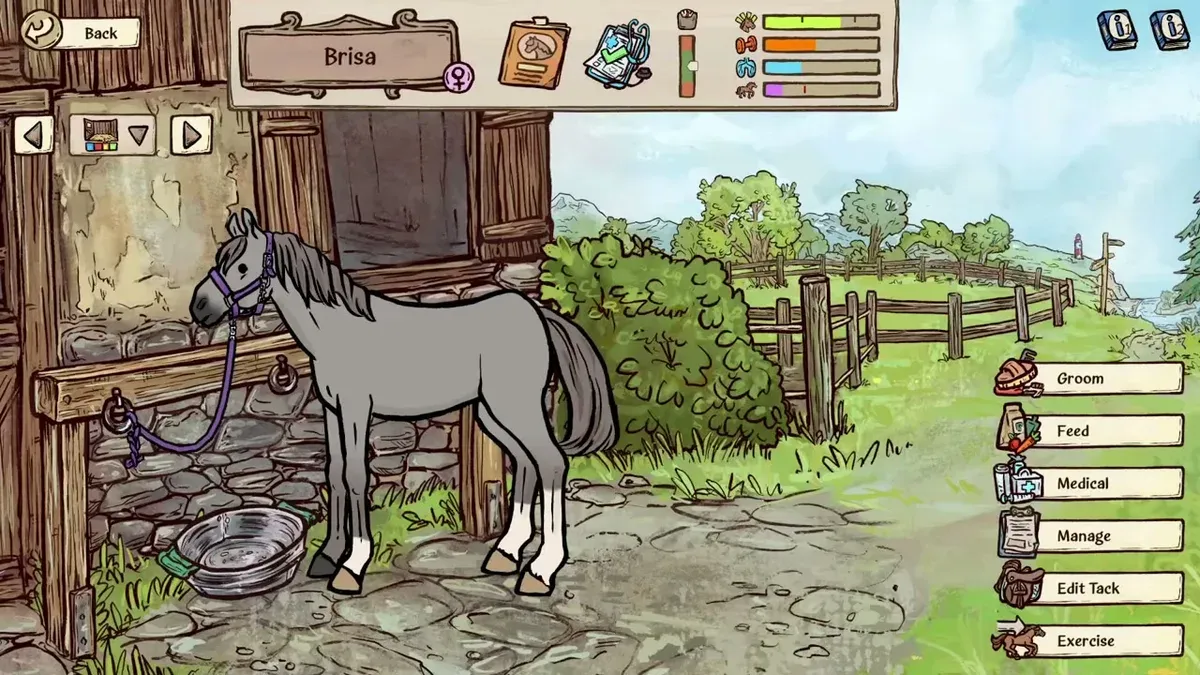
What to do when your horse gets injured
Horses of Hoofprint Bay horse injuries can interrupt training, and neglected conditions can develop into serious health problems. The right response depends on the condition: disinfect superficial wounds, rest overworked horses, and call the in-game vet for a hoof abscess. This Horses of Hoofprint Bay horse injuries guide explains the treatments, handbook duration values, and daily care habits that help prevent avoidable setbacks.
This guide covers the global Steam full release from November 4, 2026, with evidence checked November 5. Treatment details come from the in-game handbooks visible in Rohara’s full-release recording. All treatments described here are game mechanics, not real-world horse care instructions.
Start by checking the horse’s medical information before choosing another activity. Match your next action to the named condition rather than treating every warning as a grooming problem.
| Condition or warning | First response | Why it matters |
|---|---|---|
| Abrasion or cut | Apply the game’s antiseptic | Treatment reduces infection risk |
| Hoof abscess | Call the in-game vet | The handbook directs you to veterinary care |
| Exhaustion | Give the horse rest | Strength and endurance are reduced and cannot be trained while exhausted |
| Dehydration | Provide water | Neglect can lead to removal by animal welfare |
| Sepsis | Seek in-game veterinary care | The handbook warns that untreated infection can be fatal |
Avoid assuming that every problem needs the same remedy. Water addresses dehydration, while an exhausted horse needs recovery from excessive exercise. Grooming helps prevent certain injuries, but it does not replace the treatment listed for an existing condition.
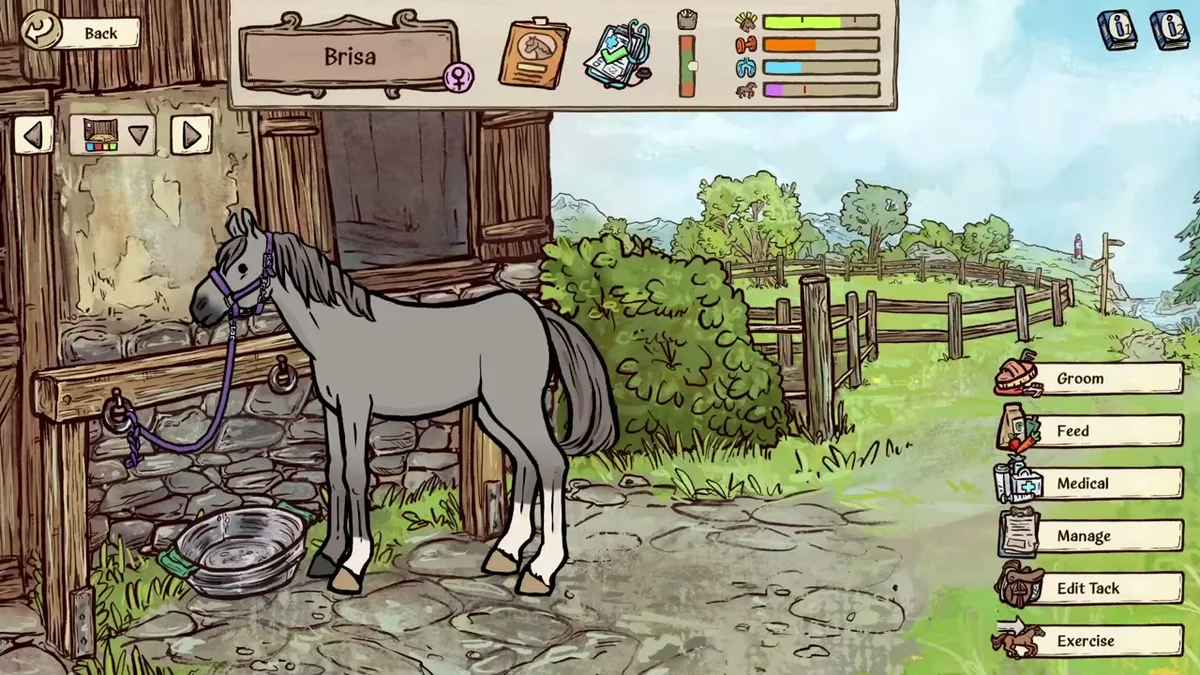
Game reference image. Image source.
Full-release gameplay and in-game handbook: Horses of Hoofprint Bay FULL RELEASE! Starting Our Horse Stable! 🐎 — Rohara, November 4, 2026. English-language reference footage. Specific handbook claims link to their observed timestamps; other uses are general game reference, not a device benchmark or proof of a bug fix.
Horse injuries: treatments and duration values
The handbook distinguishes superficial wounds, hoof problems, saddle sores, and injuries caused by overwork. That distinction determines whether you can provide basic care yourself or should involve the vet.
| Injury or illness | Cause or association described in the handbook | In-game treatment | Listed duration: treated / untreated |
|---|---|---|---|
| Abrasion | Can happen in the field or after a riding fall | Antiseptic | 1 / 2 |
| Cut | Can happen in the field or after a riding fall | Antiseptic | 2 / 3 |
| Saddle sores | Riding with an unbrushed saddle area | The game’s cream | 1 / 2 |
| Tendon injury | Overwork | Mainly rest; a vet may speed recovery | 4 / 6 |
| Thrush | Dirty stable conditions | The game’s H2O2 treatment | 2 / 3 |
| Hoof abscess | Untreated thrush or riding with stones in the hooves | Call the vet | Not established |
| Sepsis | Severe infection | Veterinary care for a severe condition | No recovery comparison given here |
The duration numbers preserve the handbook’s listed values. Their unit is not established in the available evidence, so use them for comparison rather than converting them into real-time hours or promising an exact recovery date.
For abrasions and cuts, antiseptic does more than shorten the listed duration: it reduces infection risk. These wounds can also occur in the field, so an injury does not automatically mean you missed a grooming step. The handbook’s abrasion and cut entries identify both field incidents and riding falls as possible causes.
Saddle sores and thrush have clearer care-related associations. Brush the saddle area before riding, and keep the stable clean. If thrush develops, use its specified game treatment; neglect can increase the risk of a hoof abscess.
For horse injuries involving tendons, rest remains central even when veterinary treatment may accelerate recovery. The handbook’s tendon injury, thrush, and sepsis entries also make an essential distinction: a shorter untreated duration must never be interpreted as faster recovery from sepsis.
Manage exhaustion before it becomes a tendon problem
Workload management is a major part of preventing horse injuries. The exercise bar represents work already used that day, and its red threshold marks a limit you need to watch.
Passing that threshold produces exhaustion the following day. More endurance allows a horse to handle more daily exercise, so a workload that suits one horse may be excessive for another.
| Workload situation | Handbook outcome | Practical response |
|---|---|---|
| Exercise passes the red threshold | Next-day exhaustion | Stop before exceeding the threshold |
| Horse is exhausted | Reduced strength and endurance; neither can be trained | Prioritize rest |
| Too little exercise or field time | Explosive status | Follow the handbook’s exercise guidance for that status |
| Horse spends the night in the field | Some exercise is counted | Account for turnout when considering activity |
An exhausted horse is a poor candidate for another strength or endurance session because those attributes cannot improve while the condition is active. Continuing to push an overworked horse also raises concern about tendon damage. Rest addresses the immediate problem more effectively than trying to train through reduced stats.
The opposite problem, Explosive, requires a different response. For that status, the handbook recommends Lunge free and using at least one quarter of the horse’s available exercise. That recommendation concerns insufficient activity; it is not a rehabilitation prescription for tendon injuries.
The Horse Stats & Training handbook explains the exercise bar and next-day exhaustion. Check the individual horse’s remaining allowance before adding another session, especially when planning several activities in one day. Keep the distinction clear: exhaustion signals too much work, while Explosive signals too little exercise or field time.
Build a daily routine that prevents avoidable injuries
Preventing horse injuries starts with small care tasks before you ride. Hoof cleaning, brushing, stable hygiene, feeding, and watering each address a different problem.
Use this checklist to connect each task with its purpose:
| Care task | What to do in the game | Problem it helps address |
|---|---|---|
| Check hooves | Remove stones before work | Abscess risk from riding with stones present |
| Prepare the saddle area | Curry away dirt and brush the area smooth | Saddle sores |
| Clean the stable | Maintain clean housing | Thrush associated with dirty conditions |
| Supply roughage | Provide hay or access to pasture | Hunger and inadequate food intake |
| Refill water | Drag a bucket to the water tub | Dehydration |
| Review grain needs | Select a horse and feed it individually | Weight loss in hard-working horses or hard keepers |
The care interface gives you direct ways to handle these needs. Drag hay from storage into the stable or paddock racks. For water, drag the bucket to the tub; later upgrades provide hose or automatic filling options. Grain and treats are given to the selected horse individually.
Before riding, finish both parts of coat preparation: remove dirt and smooth the saddle area with the brush. Similarly, inspect hooves for stones rather than assuming a clean-looking horse is ready for work. The Horse Care handbook shown in the recording connects these specific actions with injury prevention.
After a riding fall, checking for abrasions or cuts is a sensible follow-up because the handbook identifies falls as a possible cause. Continue checking horses that spend time in the field, too. Routine care reduces avoidable risks, but field injuries remain possible even when you have completed the usual preparation.
Separate injuries from feeding problems and grooming reactions
Some problems encountered while checking horse injuries are actually feeding or hydration conditions. They still need attention, but applying a wound treatment will not resolve them.
Low-work horses generally receive enough nutrition from hay or grazing. Hard-working horses and hard keepers need grain, and a hungry horse can become malnourished if left unfed. Select the individual horse when providing grain so you can respond to its needs.
Body condition matters in both directions. Workload reduces weight, while grain helps restore it. Too little weight can lead to malnourishment; excessive weight can lead to overweight status and laminitis. The handbook evidence does not establish a universal grain quantity, so there is no supported one-size-fits-all ration to recommend.
Dehydration needs water. Do not confuse it with hunger or exhaustion, and do not leave it unresolved: the handbook warns that neglect can result in animal welfare removing the horse.
Grooming reactions need more caution when interpreting them. Community reports suggest horses may dislike brushing or petting over cuts and abrasions. However, the player who started the Steam discussion about negative touching reactions said their horse’s medical tab showed no problem.
Other participants connected disappearing hearts with high confidence, but these remain community reports. Missing hearts or an annoyed animation alone cannot establish an injury. Check the medical information before choosing a treatment; the thread does not resolve every case of apparent dislike.
FAQ: horse injuries, recovery, and veterinary care
What is the first step for horse injuries?
Identify the condition in the horse’s medical information, then match the response to it. Abrasions and cuts use antiseptic, saddle sores use the game’s cream, and a hoof abscess requires the vet. Also check water, food, and workload, since dehydration, hunger, and exhaustion need different responses.
When should I call the vet?
Call the vet for a hoof abscess, as directed by the handbook. More severe conditions also require veterinary care, and a vet may speed recovery from a tendon injury. Basic superficial wound disinfection is player care. The evidence does not establish veterinary prices, exact response times, or a guaranteed recovery schedule, so those details should not be assumed.
Does reduced strength always mean my horse is injured?
No. Exhaustion reduces strength and endurance, but the training handbook also says pregnant and nursing mares lose these attributes. Some exercise can reduce that loss. Check the horse’s condition before deciding why its stats changed, and do not apply a healthy mare’s exercise routine to a horse recovering from a tendon injury.
Can an untreated injury kill a horse?
The in-game handbook explicitly warns that untreated sepsis can be fatal. The official Horses of Hoofprint Bay FAQ discusses retirement and removal by animal welfare, but those are separate outcomes from the handbook’s sepsis warning.
For horse injuries involving severe infection, seek veterinary care rather than waiting for a duration number to expire. A shorter untreated listing must not be read as evidence that the horse will recover sooner.
What should you read next?
- Horse Care & Grooming Guide
- Horse Breeding & Genetics
- Foal Growth & Age Milestones
- Horse Personality Traits Explained
Return to Horses & Breeding or the wiki homepage to choose another topic.
Related Articles
horses
Horses of Hoofprint Bay: Foal Growth & Age Milestones
Foals become yearlings in 4 in-game days and adults at age 12. Plan pregnancy, mare training, and stable space with the full-release timeline.
horses
Horses of Hoofprint Bay: Foal Training & Daily Care
Learn Horses of Hoofprint Bay foal training, the age-12 adult milestone, mare-and-foal walks, and how to manage daily exercise.
horses
Horses of Hoofprint Bay: Horse Age, Growth & Retirement
Understand horse age in Horses of Hoofprint Bay: eight-day pregnancy, foals becoming yearlings at four days, adulthood at age 12, and retirement guidance.
Was this helpful?
Thanks for the feedback!