
Horses of Hoofprint Bay: Horse Feeding: Hay, Grain & Boarders
Learn how to feed horses, balance hay and grain, monitor body condition, and handle hungry boarders in Horses of Hoofprint Bay’s full release.
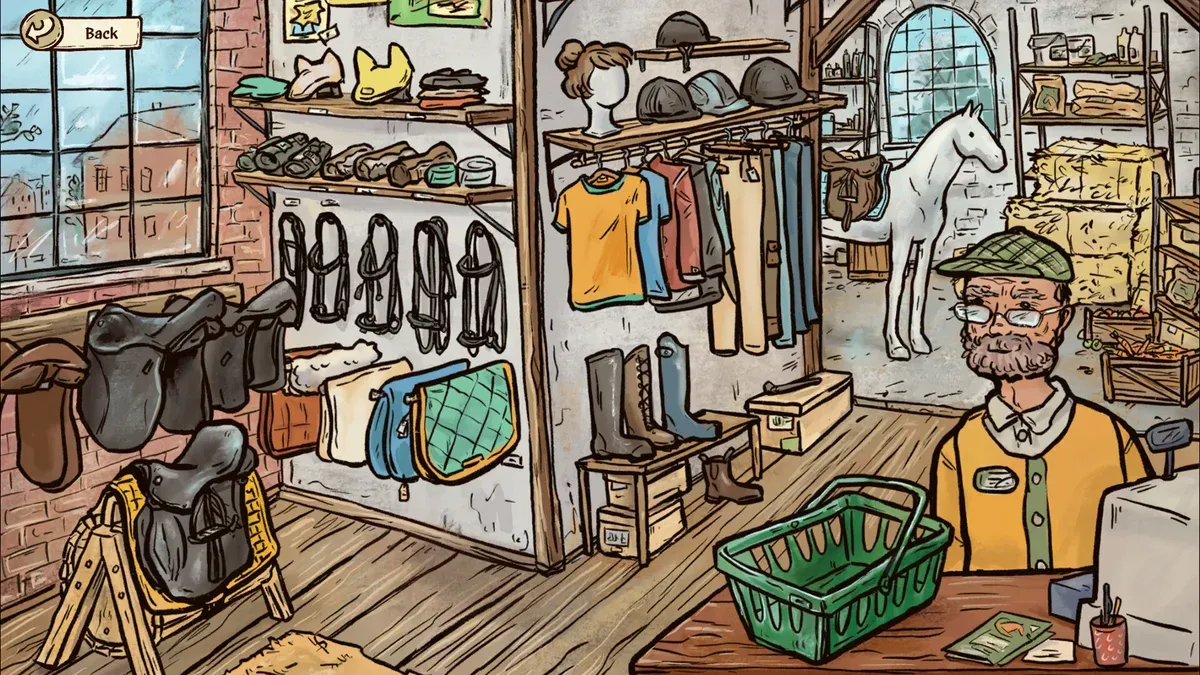
How to Feed Horses and Provide Water
A full hay rack can leave you wondering why your horse is still hungry. Horses of Hoofprint Bay horse feeding depends on roughage, workload, and body condition, making the right balance essential for preventing weight loss without overfeeding. This Horses of Hoofprint Bay horse feeding guide explains how to supply hay and water, identify horses that need grain, and account for boarders’ exercise.
This guide covers the global Steam full release of Horses of Hoofprint Bay, released November 4, 2026, with information checked November 5. The feeding instructions come from the in-game handbooks visible in Rohara’s release recording.
Start with roughage: hay or pasture. The Horse Care handbook explains that horses need this foundation, while horses doing substantial work need additional grain to prevent weight loss. It also describes the interactions used to distribute feed and water.
| Supply | How to provide it | What to remember |
|---|---|---|
| Hay | Drag hay from storage into stable or paddock racks | Putting hay into the racks supplies roughage |
| Pasture | Give horses access to grazing | Pasture provides another source of roughage |
| Grain | Select a horse and feed it individually | Extra grain supports horses whose workload increases their needs |
| Treats | Select the horse receiving the treat | Treats are an individual feeding interaction |
| Water | Drag the bucket to the water tub | Later upgrades provide a hose or automatic filling |
These controls are described in the Horse Care handbook shown in Rohara’s recording.
Keep the shared supplies and individual feeding steps in mind as you work through the stable. Filling a hay rack addresses roughage availability; selecting a horse lets you address that horse’s grain needs. A stocked rack alone does not tell you whether every horse is maintaining its weight.
For a practical horse feeding routine, check hay or grazing access and water first, then inspect individual horses. The handbook confirms that treats can be fed, but the available observations do not establish a nutritional value or grain replacement ratio for them.
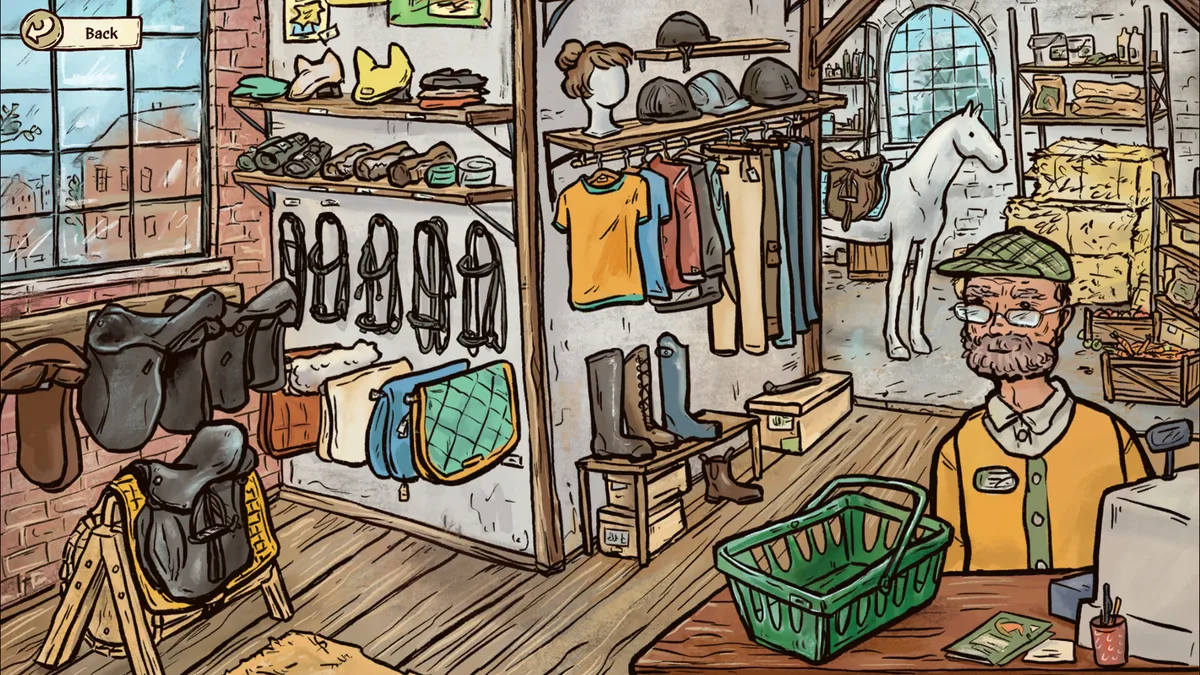
Game reference image. Image source.
Full-release gameplay and in-game handbook: Horses of Hoofprint Bay FULL RELEASE! Starting Our Horse Stable! 🐎 — Rohara, November 4, 2026. English-language reference footage. Specific handbook claims link to their observed timestamps; other uses are general game reference, not a device benchmark or proof of a bug fix.
How Much Grain Does Each Horse Need?
The useful rule for horse feeding is to match grain to the horse’s needs. The current handbook does not establish one scoop count for every horse.
According to the Injuries & Illnesses handbook visible in the recording, horses doing little work generally receive enough nourishment from hay or grazing. Horses doing demanding work, along with hard keepers that struggle to maintain weight, need grain.
| Horse’s situation | Handbook guidance | Feeding decision |
|---|---|---|
| Little work | Hay or grazing is usually sufficient | Check condition before assuming extra grain is necessary |
| Substantial work | Additional grain is needed to avoid weight loss | Account for the horse’s workload when feeding |
| Hard keeper | Grain is needed to help maintain weight | Watch that horse’s condition individually |
| Hungry and left unfed | Hunger can progress to malnourishment | Address the feeding shortage |
| Excessively high body condition | Excess weight can lead to overweight status and laminitis | Avoid continuing to increase condition indiscriminately |
Body condition reflects weight. Work reduces it, while grain helps restore it. Both extremes matter: allowing condition to fall too far risks malnourishment, while pushing it too high risks overweight status and laminitis. Those relationships appear in the Horse Stats & Training handbook shown in the release recording.
That makes body condition a useful check whenever you change a horse’s schedule. A horse moving from light activity into demanding training may need a different feeding approach. Likewise, a grain routine suited to heavy work should be reassessed when that workload changes.
A practical approach is to review condition, feed according to the horse’s workload, and check how it responds. The available release observations do not provide exact grain increments, numerical condition targets, or a guaranteed daily ration. Use the horse’s displayed condition and status to guide adjustments.
Why Boarders Get Hungry Even When Hay Is Available
Boarders can need extra attention because their workload is not limited to the activities you personally assign. The full-release handbook explicitly says that owners exercise full-board horses, and their grain needs must account for that work.
Boarding clients are accepted through the Main House office. They stay for several days, and your responsibilities depend on the owner’s contract. The How to Make Money handbook shown in Rohara’s recording distinguishes these arrangements:
| Boarding arrangement | Confirmed responsibilities | Feeding implication |
|---|---|---|
| Part board | Provide hay or pasture | Roughage provision is an explicit requirement |
| Full board | Feed and brush daily, monitor medical needs; the owner exercises the horse | Account for owner exercise when assessing grain needs |
| Schooling | Provide care and achieve training goals before the stay ends | Consider the feeding demands of the training you perform |
A full-board horse can therefore require grain even when you have not ridden it yourself. Before assuming the hay system has failed, check the boarding arrangement and the horse’s condition.
The practical order is straightforward:
- Read the owner’s contract.
- Check that required hay or pasture is available.
- Review the horse’s body condition.
- Account for exercise, including owner exercise under full board.
- Complete the contract’s other daily care requirements.
For horse feeding with boarders, the contract helps explain what needs checking. A full hay rack does not establish that a working horse has received enough total nourishment.
For example, if a full-board horse is losing condition despite having roughage, owner exercise is a relevant explanation supported by the current handbook. That does not prove the cause of every hunger complaint, but it gives you a concrete factor to investigate before applying an old community workaround.
What to Check Before Ending the Day
A dependable horse feeding routine connects food availability with each horse’s condition and activity. Checking these together makes it easier to identify what actually needs attention.
The following checklist turns the handbook’s feeding and exercise relationships into a practical review. It is a suggested workflow, rather than a confirmed requirement to perform every action at a particular time.
| Check | What you are looking for | Relevant action |
|---|---|---|
| Roughage | Hay or grazing is available | Replenish racks or provide pasture access as needed |
| Water | The horse’s water supply is provided | Use the bucket or available upgraded filling system |
| Body condition | Whether the horse is maintaining an appropriate weight | Adjust grain according to condition and workload |
| Boarding contract | Care obligations and owner exercise | Complete required care and account for grain needs |
| Exercise bar | How much work the horse has used today | Avoid passing the red threshold |
Keep body condition and exercise in view together. The training handbook describes the exercise bar as work already used that day. Passing its red threshold causes exhaustion the following day, and higher endurance allows more daily exercise. Grain addresses weight loss; the handbook does not describe it as a way to reset that exercise limit.
Field time also matters. Spending the night in the field counts as some exercise, while insufficient exercise can cause the explosive state. The Injuries & Illnesses handbook recommends “Lunge free” and at least one quarter of available exercise for that situation. This is exercise guidance, separate from treating hunger or an injury.
Before doing that work, complete the relevant care checks: remove stones from hooves, curry away dirt, and brush the saddle area smooth before riding. These steps belong alongside feeding in the daily routine described by the Horse Care handbook.
How to Interpret Older Hunger Reports
Older horse feeding discussions describe frustrating experiences, but their dates and versions matter. The February threads predate the November full release, and the Super hungry horses community discussion explicitly references the demo’s 25-day limit.
Community reports in that thread describe horses staying hungry despite available hay and fields. Some players reported feeding two or three scoops daily; another suggested closing field access overnight so horses would eat hay. These are reports of demo behavior and attempted workarounds, not verified full-release feeding requirements.
In the My board horses keep getting hungry discussion, player experience suggested feeding toward the middle of the green body-condition range. Another player reported continued hunger despite ending the day at that level or higher. The disagreement means this should not be presented as a guaranteed target.
The current handbook does support one relevant explanation: full-board owners exercise their horses, affecting grain needs. It does not establish that every February hunger problem has the same cause, remains present, or has been fixed.
If hunger persists, compare the horse’s contract, roughage access, workload, and body condition. A useful record of an unresolved problem would include those details and the version being played. That gives a clearer account than assuming either a universal feeding mistake or a confirmed release bug.
FAQ
What is the best horse feeding routine?
Provide hay or pasture and water, then review each horse’s body condition. Give grain according to workload and individual needs, including hard keepers and full-board horses exercised by their owners. Recheck condition as activity changes instead of applying one fixed ration across the stable.
Does every horse need grain every day?
The current handbook says horses doing little work usually receive enough nourishment from hay or grazing. Horses doing substantial work and hard keepers need grain. It does not supply a universal scoop count, so assess each horse’s condition and workload rather than assuming every horse needs the same amount.
Why is my boarded horse hungry when I have not ridden it?
Under full board, the owner exercises the horse. That work can create grain needs even when you have not ridden it personally. Check the contract, roughage access, and body condition. Owner exercise is a confirmed consideration, though it does not explain every possible persistent hunger problem.
Can I overfeed a horse?
Yes. The training handbook links excessively high body condition with overweight status and laminitis. Aim to maintain suitable condition instead of continually raising it. If the horse develops a medical condition, consult the in-game health guidance; the care handbook assigns more severe conditions to the in-game vet.
What should you read next?
- Horse Care & Grooming Guide
- Horse Breeding & Genetics
- Foal Growth & Age Milestones
- Horse Personality Traits Explained
Return to Horses & Breeding or the wiki homepage to choose another topic.
Related Articles
horses
Horses of Hoofprint Bay: Foal Growth & Age Milestones
Foals become yearlings in 4 in-game days and adults at age 12. Plan pregnancy, mare training, and stable space with the full-release timeline.
horses
Horses of Hoofprint Bay: Foal Training & Daily Care
Learn Horses of Hoofprint Bay foal training, the age-12 adult milestone, mare-and-foal walks, and how to manage daily exercise.
horses
Horses of Hoofprint Bay: Horse Age, Growth & Retirement
Understand horse age in Horses of Hoofprint Bay: eight-day pregnancy, foals becoming yearlings at four days, adulthood at age 12, and retirement guidance.
Was this helpful?
Thanks for the feedback!