
Horses of Hoofprint Bay: Horse Coats, Patterns & Colors
Learn which coat patterns are documented, how foals inherit colors and markings, and what horse customization is confirmed.
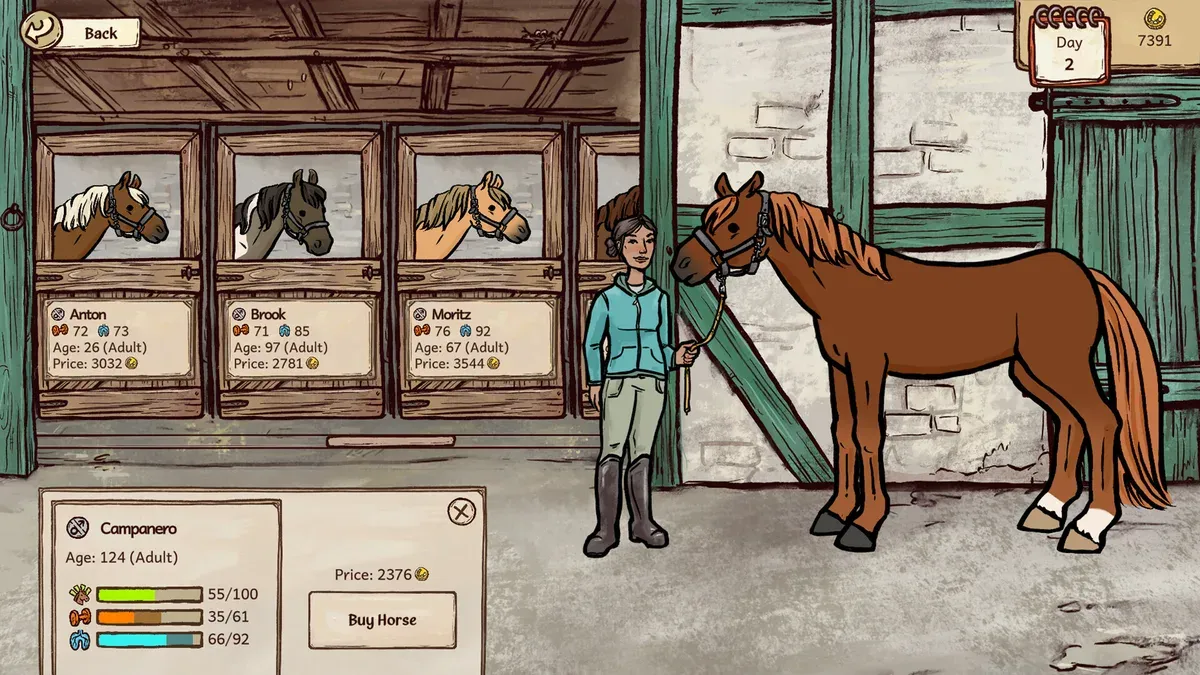
Image: official Steam catalog screenshot. Source: verified Steam listing.
Watch the related YouTube video: Horses of Hoofprint Bay – OUT NOW — thogli studios.
Official launch trailer used as general reference for the full game. It is not a dedicated tutorial, device benchmark, or proof of an individual mechanic.
Understanding colors, patterns, and markings
Horses of Hoofprint Bay horse coats give you a visible breeding goal, whether you love spotted horses or want to carry a favorite parent’s coloring into another generation. Your choices matter because foals can inherit coloring and white patterns from their parents. This guide to Horses of Hoofprint Bay horse coats explains the documented appearances, the role of breeding, and the customization options supported by official information.
This is a source-based guide covering the Steam PC full release dated November 4, 2026, with supplied information checked November 5. Release details come from the official Horses of Hoofprint Bay Steam listing. The guide does not claim firsthand testing.
Start by separating the different terms used to describe a horse’s appearance:
| Term | What the official material establishes | What to remember |
|---|---|---|
| Coloring | Foals inherit coloring from their parents | No complete named color catalog is supplied |
| White patterns | These can also pass from parents to foals | Exact inheritance probabilities are not documented |
| Leopard patterns | Developers describe several blanket and spotted appearances | These descriptions concern markings |
| Facial markings | Face markings were listed among October demo additions | Individual marking names are not enumerated |
These distinctions make comparisons more useful. A horse’s overall coloring, white areas, and spots describe different aspects of its appearance. Recording those features separately gives you a clearer breeding objective than simply looking for an unusual horse.
The available material establishes considerable visual variety, but it does not provide a complete checklist of every possible coat combination. Treat the examples below as documented features rather than an exhaustive collection guide.
Confirmed horse coats and patterns
Leopard patterns receive the most detailed treatment in the supplied developer updates. The pre-release pattern announcement describes a system using three separate layers to produce multiple appearances. That is a development description of how the visuals were assembled, not evidence of three player-facing controls.
The launch-day publisher Q&A confirms that additional horse patterns were among the features added since the original February demo. Together, these sources explain the documented visual range without establishing every setting available to players.
| Documented leopard appearance | Description supported by the developer update |
|---|---|
| Snowcap blanket | A snowcap-style blanket appearance |
| Spotted blanket | A blanket pattern incorporating spots |
| Full-body leopard | Spots distributed across the body, with variation in size |
| Snowflake | A snowflake-style dotted appearance |
The useful distinction is between blanket patterns, broader body spotting, and snowflake effects. These are specific looks you can identify when considering the appearance you want. The developers do not supply a rarity ranking, a total number of combinations, or breeding percentages for these examples.
For horse coats, the layered approach helps explain why a few pattern descriptions can encompass varied results. However, the announcement does not establish that players can independently switch every layer on or off.
Facial markings add another area of variation. The October demo announcement explicitly lists them alongside Appaloosa-style patterns, but it does not name a complete set of facial markings. There is therefore no supported basis here for a numbered facial-marking checklist or instructions for selecting individual shapes.
The launch-day Q&A also discusses Tobiano as a reference used while developing the pattern system. Programmer Theresa Thoma explains that distinguishing it from incorrectly labeled Frame Overo imagery helped keep the visual research consistent. This describes the research behind the artwork; mentioning Frame Overo in that explanation does not establish a separate selectable game option.
For practical comparisons, focus on the visible features the sources actually describe: blanket coverage, spotting, spot size, and facial markings. Avoid treating every equestrian term mentioned in an interview as a confirmed menu entry.
How foals inherit coat appearance
Breeding connects horse coats to the game’s longer-term stable management. According to the official store description, offspring receive a combination of parental coloring, white patterns, and personality traits. The developers explicitly frame pairing decisions around both appearance and performance goals.
That supports planning for a preferred look, but it does not supply a genetic calculator. The reference material gives no allele tables, dominant or recessive rules, carrier information, or numerical odds for individual patterns.
| Breeding question | Supported answer |
|---|---|
| Can offspring inherit parental coloring? | Yes; coloring is part of the described inheritance system |
| Can white patterns pass to foals? | Yes; the store specifically includes white patterns |
| Can you inspect possible offspring? | An advanced breeding station lab provides foal previews |
| Are exact coat probabilities documented? | No percentages or complete inheritance formulas appear in the cited sources |
A useful approach is to define your appearance goal before choosing a pairing. Decide whether you care most about overall coloring, a blanket pattern, or a spotted appearance. Those goals correspond to features described in the official material.
Then consider both parents rather than treating one parent’s appearance as a guaranteed outcome. The store describes inheritance as a combination of parental features, so it does not support a promise that the foal will duplicate either horse.
As your facilities develop, the breeding station lab becomes relevant. The official description says this advanced facility can preview possible foals. Use that capability to examine potential outcomes when it becomes available in your game.
The cited sources do not identify the exact upgrade requirement, price, or layout of the preview interface. They also do not establish that a preview guarantees a particular birth result. “Possible offspring” is the supported scope.
Finally, keep appearance goals alongside the other qualities you want from your horses. The developers present breeding for looks and breeding for stats as legitimate choices. Nothing in the cited material establishes that a particular coat improves competition performance or signals superior stats.
What horse customization actually includes
Customization of horse coats needs careful reading because the store discusses several kinds of editing together. It explicitly confirms built-in color tools for characters and tack, while also describing accessible files that can alter horse and character appearance.
Those statements establish different capabilities:
| Customization route | What is confirmed | What remains unspecified |
|---|---|---|
| Built-in color picking | Character and tack appearance can be edited | A comparable horse-coat color picker is not explicitly confirmed |
| Texture and text-file changes | Files can be modified to change horse and character appearance | Exact file locations and editing procedures |
| Developer horse-creator preview | A creator appears in the leopard-pattern development presentation | Whether players receive that same interface and its controls |
This distinction matters if you are looking for an immediate way to recolor a horse. The documentation supports appearance modification through game files, but it does not provide a verified sequence of in-game buttons for painting a coat.
Likewise, the horse creator mentioned in the development update should not become an invented walkthrough. A preview showing the developers working with patterns establishes what was demonstrated, not necessarily what a player can access during normal progression.
Breeding is the clearly documented gameplay route for passing coloring and white patterns to offspring. File modification is a separately documented way to alter appearance. The supplied information does not explain whether those edits interact with inheritance, so it would be misleading to promise that a modified look will breed true.
If you want a coordinated appearance without changing horse files, character and tack color customization is explicitly supported. That gives you a documented styling option while leaving questions about horse-editing controls unresolved.
Coat patterns, breeds, and older demo information
When comparing horse coats, keep breed names separate from pattern descriptions. The leopard-pattern announcement uses Appaloosas and Knabstruppers as familiar real-world comparisons for spotted horses. It does not establish those names as separate selectable breeds.
Similarly, the October announcement’s reference to Appaloosa patterns describes an appearance feature. It should not be expanded into an unsupported breed roster, breed-specific stat table, or acquisition guide.
The official FAQ says additional horse breeds are not planned as major future content. That helps set expectations, but it does not provide a complete list of the horses currently represented. There is no source-supported basis here for promising future breed packs or additional coat collections.
Older demo information also needs context. The earlier leopard update said its additions would not reach the demo then being discussed. A later announcement explicitly included facial markings and Appaloosa-style patterns in the October demo. The later statement updates that earlier picture.
For checking an appearance claim, use these distinctions:
- Identify the demo: February and October are different versions, so their feature descriptions are not interchangeable.
- Look for specific feature wording: A named pattern is stronger evidence than assuming a breed name implies a full breed system.
- Separate examples from catalogs: Several documented appearances do not establish the total number of coats.
- Keep probabilities unconfirmed: Neither a development preview nor a familiar real-world pattern supplies breeding odds.
This lets you pursue a clear visual goal without relying on rarity charts, hidden genetics, or creator instructions that the available sources do not substantiate.
Frequently asked questions
Is there a complete list of horse coats?
Not in the cited official material. The developers document inherited coloring and white patterns, facial markings, and several leopard appearances. They do not provide a comprehensive color catalog, a total combination count, or rarity tiers. Any purported complete checklist would need additional evidence.
Can foals inherit a parent’s color and markings?
Yes. The official store describes foals inheriting a combination of their parents’ coloring and white patterns, along with personality traits. However, the sources do not explain exact probabilities or guarantee that a foal will copy a specific parent. The advanced breeding station lab can preview possible offspring.
Are Appaloosa and Knabstrupper confirmed as separate breeds?
The supplied pattern announcement mentions them as real-world examples of horses with leopard spotting. That comparison does not establish either name as a selectable breed. The documented feature is the spotted appearance; a complete breed roster is not included in these sources.
Can you freely repaint a horse in the game?
A built-in horse repainting interface is not explicitly confirmed by the cited material. The store confirms color picking for characters and tack, plus texture and text-file modification that can change horse appearance. It does not provide verified horse-creator steps or explain how modified appearances interact with breeding.
What should you read next?
- Horse Care & Grooming Guide
- Horse Breeding & Genetics
- Foal Growth & Age Milestones
- Horse Personality Traits Explained
Return to Horses & Breeding or the wiki homepage to choose another topic.
Related Articles
guides
Horses of Hoofprint Bay: Steam Achievements Guide
Plan Horses of Hoofprint Bay achievement goals across breeding, training and competition wins. Find confirmed milestones and help with disabled achievements.
horses
Horses of Hoofprint Bay: Foal Growth & Age Milestones
Foals become yearlings in 4 in-game days and adults at age 12. Plan pregnancy, mare training, and stable space with the full-release timeline.
horses
Horses of Hoofprint Bay: Foal Training & Daily Care
Learn Horses of Hoofprint Bay foal training, the age-12 adult milestone, mare-and-foal walks, and how to manage daily exercise.
Was this helpful?
Thanks for the feedback!