
Horses of Hoofprint Bay: Horse Care & Grooming Guide
Learn confirmed horse care basics in Horses of Hoofprint Bay, including grooming, hoof picking, injury awareness, staff support, and welfare.
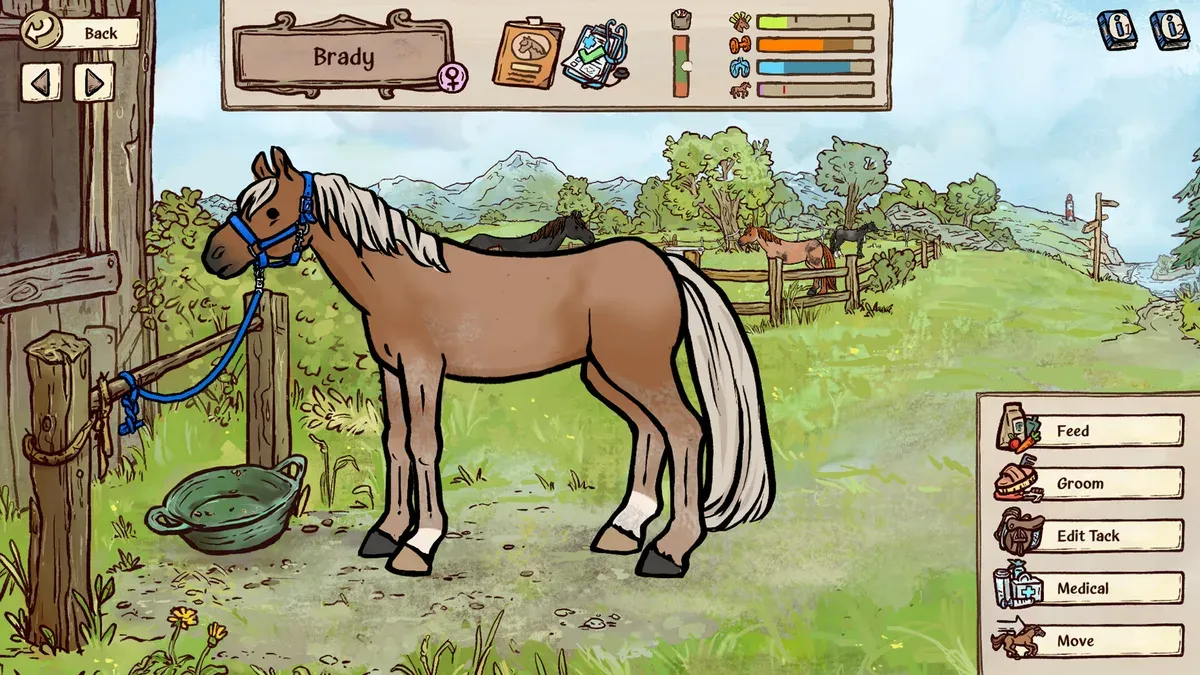
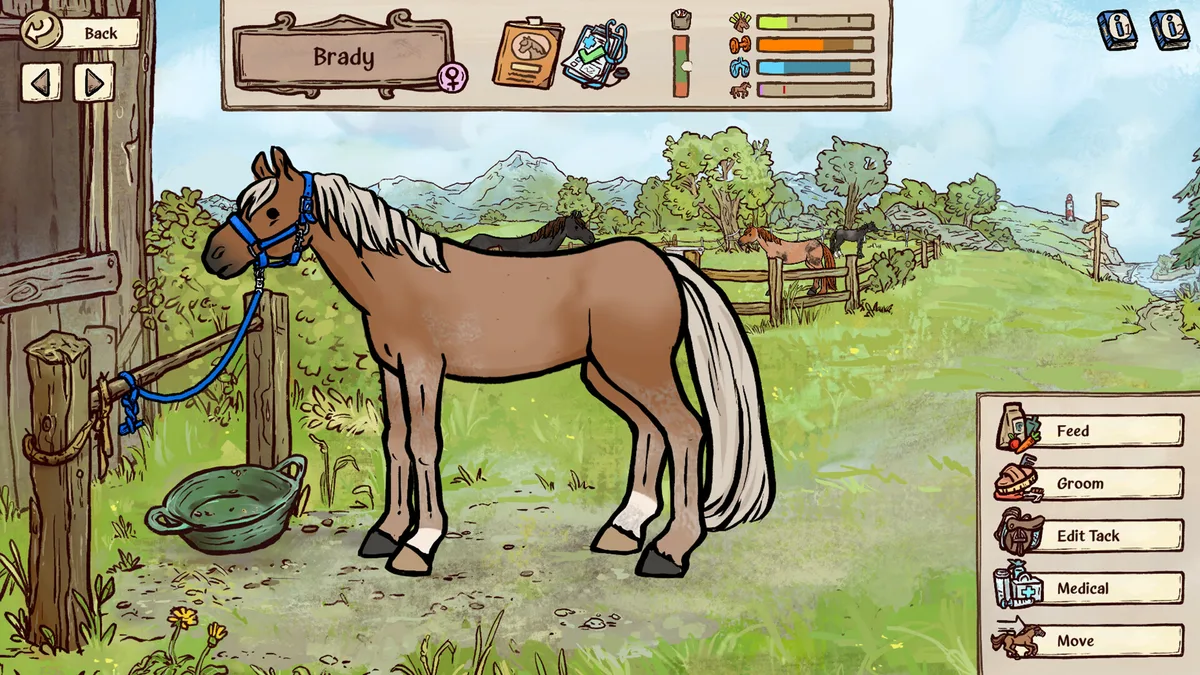
Image: official Steam catalog screenshot. Source: verified Steam listing.
Watch the related YouTube video: Horses of Hoofprint Bay – OUT NOW — thogli studios.
Official launch trailer used as general reference for the full game. It is not a dedicated tutorial, device benchmark, or proof of an individual mechanic.
Build Your Daily Routine Around Horse Health
This Horses of Hoofprint Bay horse care guide starts with a simple priority: make care part of your plans before heading out to train. Brushing and hoof picking help prevent saddle sores and abscesses, while neglect can lead to animal-welfare confiscation. Use this Horses of Hoofprint Bay horse care guide to organize grooming, approach injuries carefully, and keep your horses’ needs manageable as your stable grows.
This source-review draft covers the global Steam PC full release, released November 4, 2026, according to the official Horses of Hoofprint Bay Steam listing, checked November 5. It is based on published information rather than firsthand playtesting; no numeric patch version is verified.
The official description establishes three central responsibilities: groom your horses, use the brush and hoofpick for preventive care, and respond appropriately when scrapes or injuries occur. A useful routine keeps all three visible instead of treating a clean-looking horse as the end of the job.
The following checklist organizes those responsibilities. It is a suggested planning order, not a documented sequence the game requires.
| Care priority | Suggested action | Confirmed basis |
|---|---|---|
| General grooming | Include grooming and combing in your care routine | Both interactions appear in the official description |
| Preventive care | Make time for the brush and hoofpick | These tools help prevent saddle sores and abscesses |
| Injury awareness | Pay attention to scrapes and injuries when they occur | Injuries require appropriate treatment |
| Growing responsibilities | Consider buildings and staff as your herd expands | Upgrades support horse needs, and staff help with care |
The practical aim of this horse care guide is consistency. Before focusing on the next competition or another horse, account for the care responsibilities you already have. The published sources do not provide a universal daily checklist, so adapt this outline to the instructions available in your game.
Horse Grooming: Give the Brush and Hoofpick Their Place
Horse grooming belongs within the broader care workflow. The launch description connects hands-on care with preventing health problems, giving the brush and hoofpick a purpose beyond improving appearance.
That distinction matters when you are learning the stable routine. Grooming, combing, hoof care, and injury treatment all appear within the game’s care responsibilities, but the supplied information does not establish that completing one automatically completes the others.
| Interaction | What the official description confirms | How to approach it |
|---|---|---|
| Grooming and combing | Horses have dedicated care interactions | Include them when attending to your horse |
| Brush | Named alongside the hoofpick for preventing saddle sores and abscesses | Treat brushing as part of preventive care |
| Hoofpick | Named alongside the brush for preventing those conditions | Remember hoof care when organizing grooming |
The source describes the two tools together. It does not publish prevention percentages, required stroke counts, or a maximum number of turns you can safely skip. Avoid building your routine around an assumed allowance for missed care.
For example, if you have finished brushing and are ready to move on, use that moment to remember the hoofpick as well. This is a practical reminder based on the tools the developers identify, rather than a claim about a hidden completion bonus.
Likewise, preventive care should not be assumed to cure an existing problem. The official description separately mentions preventing saddle sores and abscesses and treating injuries appropriately. It does not explain a brush-only or hoofpick-only cure.
For grooming, the central advice in this horse care guide is straightforward: keep both tools in your routine and use the game’s own instructions for the interactions. The sources do not support an exact grooming duration or a guaranteed injury-free result.
Injuries and Medical Reports: What Is Confirmed?
The injury advice in this horse care guide has a clear boundary: scrapes and injuries are confirmed, but detailed treatment procedures are absent from the cited official material.
That leaves a useful distinction between knowing a problem needs attention and knowing the correct action for a specific diagnosis. The store page establishes the first. It does not provide enough information to reconstruct the second.
| Topic | Evidence available | Detail that remains unverified |
|---|---|---|
| Scrapes and injuries | The official listing says they require appropriate treatment | Medicines, treatment order, and recovery times |
| Saddle sores and abscesses | Brush and hoofpick use supports prevention | Exact risk calculations and treatment procedures |
| Medical reports | The official store screenshot shows a Medical Report management book | The report contents, diagnostic fields, and treatment steps |
| In-game library | Contains information about game horses and real horses | Which individual conditions or treatments it explains |
The official Steam screenshot of the management books visibly includes a Medical Report book. That verifies the entry’s existence, but does not reveal its contents. A report-reading sequence, diagnostic labels, and treatment instructions still need direct documentation.
When an injury occurs, use the instructions presented in your game rather than guessing from the condition’s name. The in-game library is also a confirmed source of equestrian information, although the official description does not guarantee that it answers every treatment question.
A sensible way to approach uncertain care information is to:
- Read any instructions accompanying the problem before choosing an action.
- Consult the in-game library for relevant background.
- Distinguish preventive grooming advice from treatment advice.
- Avoid relying on unsupported recovery timers or medicine combinations.
These are recommendations for using the available information, not a verified treatment sequence. The same evidence limit applies to feeding amounts and touch-related confidence thresholds: the supplied pages provide no values to recommend.
For a specific injury, exact instructions are more useful than an invented universal remedy. Until those instructions are documented, the reliable advice is to recognize the issue and follow the guidance available in the game.
Understand Welfare, Retirement, and Horse Ages
Neglect has a substantial consequence. The official FAQ explains that animal welfare can confiscate neglected horses, removing them from active play. It also explains that horses eventually retire.
Those outcomes should inform how you manage the stable, but they should not be collapsed into a single health mechanic. Retirement is described as something horses eventually reach; confiscation is linked specifically to neglect.
| FAQ topic | Confirmed explanation | What it means for planning |
|---|---|---|
| Horse age | Displayed ages represent in-game days, or turns | Do not interpret the number as years or months |
| Retirement | Horses eventually retire and leave active play | Plan with the knowledge that individual horses retire |
| Welfare confiscation | Neglected horses can be taken away and leave active play | Keep care responsibilities within your capacity |
| Overall game length | The full version has no day limit | Retirement does not mean the whole playthrough ends |
The FAQ does not specify the exact neglect threshold. It provides no verified countdown, number of missed tasks, or guaranteed warning period before confiscation. That makes a strategy based on “one more safe day” unsupported.
A better application of this horse care guide is to make ongoing attention part of stable management. If another horse would make it difficult to keep up with the ones already present, reconsider the timing of that expansion.
Unlimited playthrough days and an individual horse’s career are separate facts. You can continue playing, while horses can still retire or be removed through welfare intervention.
Keep Care Manageable as Your Stable Grows
This horse care guide becomes more relevant as your herd expands: each additional horse adds to the care you need to oversee. The launch description identifies building upgrades and hired staff as ways to support a growing yard.
Upgrades create room for more horses and help meet their needs. Staff can assist with care and training, while more advanced buildings unlock additional staff applications. Those are confirmed management options, although the cited material does not document every job or assignment.
| Management option | Confirmed role | Planning question |
|---|---|---|
| Building upgrades | Increase space and better accommodate horse needs | Does the yard support the horses you want to keep? |
| Hired staff | Help maintain care and training for a growing herd | Would assistance make current responsibilities easier to manage? |
| Advanced building stages | Unlock additional staff applications | Would further development expand your staffing options? |
Use those systems to support a manageable stable. The sources do not establish a recommended number of horses per employee, a hiring order, or a point at which staff can handle every care task.
For example, wanting another horse is a good reason to review your existing workload. Consider whether you are already keeping up with grooming and injury attention, then examine the building and staffing options available to you. This is a management recommendation grounded in the advertised systems, not an optimized purchase route.
Earlier developer updates also need context. The supplied development announcement was written while features were being tested and balanced. It does not establish exact launch-version care values.
For daily decisions, prioritize the instructions in your current game. Use the official descriptions to understand the responsibilities, and avoid filling gaps with assumed costs, timers, or hidden health formulas.
FAQ
What is the main takeaway from this horse care guide?
Build a consistent routine around grooming, the brush, the hoofpick, and attention to injuries. The official description connects brush and hoofpick use with preventing saddle sores and abscesses. As your herd grows, use the available buildings and staff to help keep care manageable.
What does horse grooming involve?
The official listing confirms grooming and combing interactions and specifically names the brush and hoofpick as preventive care tools. It does not provide a required number of strokes, an exact time commitment, or a verified order for completing those interactions. Follow the instructions in your current game.
Can grooming cure an injury that already exists?
The cited sources do not establish that it can. They describe brush and hoofpick use for prevention and separately state that scrapes and injuries require appropriate treatment. No specific medicine, treatment sequence, or recovery period is documented in the material used for this article.
Can horses die or be taken away?
In response to its question about death, the official FAQ describes retirement and confiscation through animal welfare. Retired and confiscated horses are effectively removed from play. Neglect can cause confiscation, but the FAQ does not publish an exact threshold. It also clarifies that horse ages count in-game days rather than years or months.
What should you read next?
- Horse Breeding & Genetics
- Foal Growth & Age Milestones
- Horse Personality Traits Explained
- Horse Coats, Patterns & Colors
Return to Horses & Breeding or the wiki homepage to choose another topic.
Related Articles
horses
Horses of Hoofprint Bay: Foal Growth & Age Milestones
Foals become yearlings in 4 in-game days and adults at age 12. Plan pregnancy, mare training, and stable space with the full-release timeline.
horses
Horses of Hoofprint Bay: Foal Training & Daily Care
Learn Horses of Hoofprint Bay foal training, the age-12 adult milestone, mare-and-foal walks, and how to manage daily exercise.
horses
Horses of Hoofprint Bay: Horse Age, Growth & Retirement
Understand horse age in Horses of Hoofprint Bay: eight-day pregnancy, foals becoming yearlings at four days, adulthood at age 12, and retirement guidance.
Was this helpful?
Thanks for the feedback!