
Horses of Hoofprint Bay: Foal Growth & Age Milestones
Foals become yearlings in 4 in-game days and adults at age 12. Plan pregnancy, mare training, and stable space with the full-release timeline.
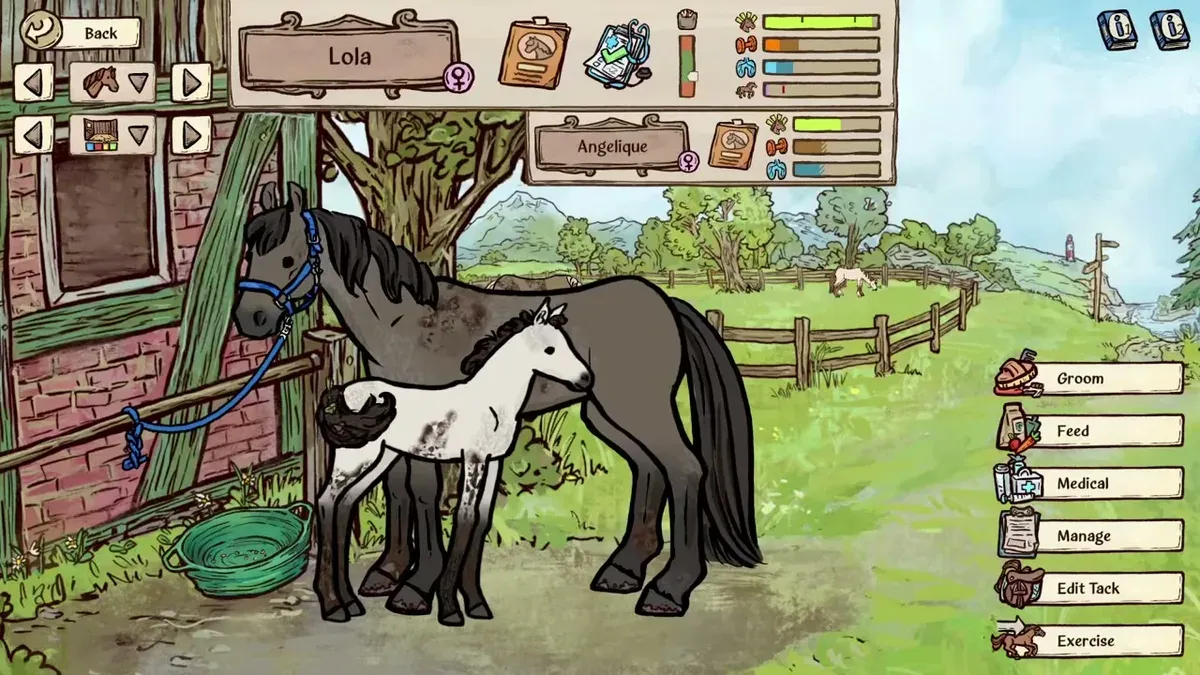
How long does a foal take to grow?
Foals become yearlings after four in-game days, making that the first milestone in Horses of Hoofprint Bay foal growth. Knowing the full timeline helps you schedule breeding, prepare space, and plan around your mare’s pregnancy. Horses of Hoofprint Bay foal growth reaches its next major milestone at age 12 in-game days, when the horse becomes an adult, according to the Breeding handbook visible in Rohara’s full-release recording.
These timings apply to the November 4, 2026 global Steam full release, with evidence checked November 5. Pregnancy takes another eight in-game days before birth, so it belongs on your breeding calendar separately from the young horse’s age.
| Stage | Confirmed timing | What it means for planning |
|---|---|---|
| Pregnancy | Eight in-game days | Allow this time before the foal is born |
| Foal | First four days after birth | The foal stays with its mother |
| Yearling | From age four until adulthood at age 12 | Allow approximately eight days in this stage |
| Adult | Begins at age 12 days | The horse has completed its foal and yearling stages |
The publisher’s release-week FAQ also confirms the eight-day pregnancy and four-day foal stage. The full-release handbook supplies the precise adulthood threshold.
For foal growth, the useful sequence is therefore eight days of pregnancy, four days as a foal, and approximately eight days as a yearling. Adding those intervals gives a planning total of about 20 in-game days from the start of pregnancy to adulthood.
That total describes the combined schedule. The horse itself is 12 days old when it becomes an adult because its age begins at birth.
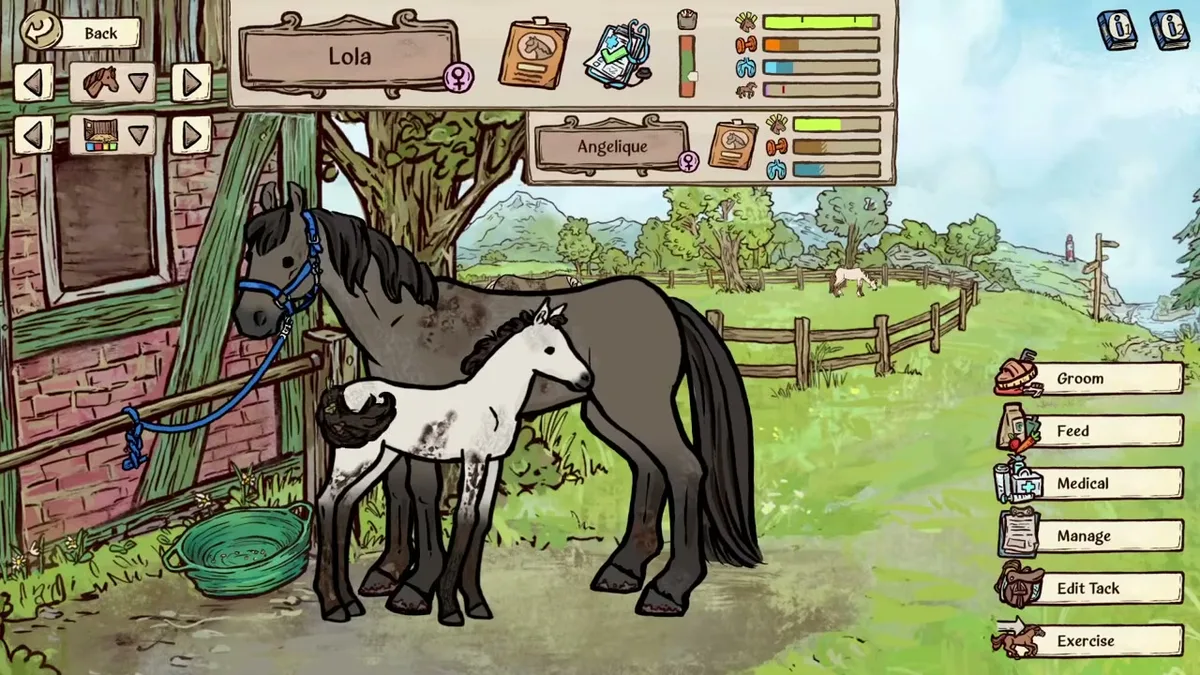
Unaltered gameplay still from JayPlays’ full-release video. General visual context, not proof of an undocumented mechanic. Image source.
Full-release gameplay and in-game handbook: Horses of Hoofprint Bay FULL RELEASE! Starting Our Horse Stable! 🐎 — Rohara, November 4, 2026. English-language reference footage. Specific handbook claims link to their observed timestamps; other uses are general game reference, not a device benchmark or proof of a bug fix.
Count horse age separately from your save’s day
The easiest way to misread foal growth is to mix up three different counters: the current day of your save, the horse’s age, and the number of days you have owned it.
The official Steam FAQ explains horse ages as in-game days, also described as turns. An age of six therefore means six game days of life. The word “yearling” names a development stage within that compressed system.
For a foal born at your yard, use its birth as the starting point:
- Birth plus four in-game days: the yearling milestone.
- Birth plus 12 in-game days: the adulthood milestone.
- Yearling milestone to adulthood: approximately eight additional days.
The 12-day adulthood threshold counts the foal’s entire life. Adding another 12 days after the yearling transition would overestimate the wait.
For purchased horses, use their displayed age instead of starting a new countdown on purchase day. A yearling already aged six is further through development than one aged four, even if both arrive at your stable on the same day.
Keep a simple note of each homebred horse’s birth day and expected milestones. When several foals are growing at once, this makes it easier to anticipate which horse reaches adulthood next.
If a horse’s stage appears inconsistent with its age, compare the displayed age with the Breeding entry in your game’s library. Recording the age, stage label, and game version also gives you useful details if you need to report a possible issue.
Plan the mare’s work around pregnancy
Pregnancy affects your riding schedule before the foal arrives. The Breeding handbook divides the eight-day pregnancy into two halves, with different activity rules.
| Period | Duration or timing | Handbook guidance |
|---|---|---|
| First half of pregnancy | First four days | The mare can continue normal work |
| Second half of pregnancy | Remaining four days | Riding is unavailable; lunging is permitted |
| Lunging during the second half | During that restricted period | It provides no strength or endurance training gains |
| Nursing | Foal’s first four days | The mare may be bred again while nursing |
The practical consequence is a predictable interruption to ridden work. If your plans depend heavily on one mare, account for the second half of pregnancy before committing her to a breeding cycle.
Lunging remains an available activity during that period, but it will not advance strength or endurance. Adjust your expectations accordingly: an available exercise does not always provide its usual training benefit.
A manageable approach is to:
- Note when pregnancy begins.
- Put any planned ridden work within the first half, following the handbook’s allowance for normal work.
- Shift your attention to other horses once riding becomes unavailable.
- Record the birth day so you can track the foal’s development separately.
The handbook also allows a nursing mare to be covered again. This lets a new pregnancy overlap with the previous foal’s early development. It does not change either offspring’s age milestones.
Before using that option, consider whether you want several young horses progressing through different stages together. foal growth is predictable enough to schedule overlapping generations, but a faster breeding schedule also brings future housing and care decisions closer together.
Treat repeat breeding as a management choice. The ability to start another pregnancy does not tell you whether your current yard has the space or resources you want for another horse.
Buying a yearling and preparing stable space
Buying a young horse gives you a different starting point on the foal growth timeline. You can assess the horse’s existing age instead of waiting through pregnancy and the newborn stage.
The Breeder’s stock shown in the full-release recording includes horses explicitly labeled as yearlings at ages four and six, with purchase and reservation controls visible.
Using the handbook’s age-12 adulthood threshold produces these estimates:
| Yearling age shown | Adult age threshold | Calculated time remaining |
|---|---|---|
| Four in-game days | 12 in-game days | Approximately eight days |
| Six in-game days | 12 in-game days | Approximately six days |
The remaining times are arithmetic based on the displayed ages and handbook threshold. They are useful for comparing how long two young horses have left before adulthood.
Age is only one part of that decision. The official Steam description of breeding and stable management explains that offspring inherit combinations of coloring, white patterns, and personality traits. It also describes selecting pairings for appearance or stats. Consider how a horse fits your breeding goals alongside its place on the growth calendar.
Check your current housing before buying or beginning another pregnancy. Building upgrades create room for more horses, but the full-release stock screen does not establish a maximum stable or yearling capacity.
Older development announcements included proposed housing totals and explicitly marked them as subject to change. Your current building information is the better basis for deciding how many young horses to accommodate.
When comparing breeding with purchasing, consider the timing you actually need. Breeding gives you a planned pairing and the entire pregnancy-to-adulthood schedule. Purchasing an existing yearling starts with a horse whose age and current characteristics you can inspect.
Turn the growth timeline into a breeding plan
A useful foal growth plan connects each age milestone to a decision. You do not need a complicated spreadsheet; a short record of pregnancies, births, and expected adult transitions can make a growing herd easier to manage.
| Milestone | Useful planning action |
|---|---|
| Pregnancy begins | Allow eight days until birth and review future housing needs |
| Second half of pregnancy begins | Adjust plans for the mare’s riding restriction |
| Foal is born | Record its birth day and calculate age-four and age-12 milestones |
| Foal reaches age four | Check its yearling stage and review upcoming space needs |
| Horse reaches age 12 | Review its adult management and training plans |
Start with the date you care about most. If you want another adult horse available for your longer-term plans, allow about 20 in-game days from pregnancy beginning. If you already have a newborn, the relevant wait is 12 days. If you are considering a yearling, subtract its displayed age from 12.
These calculations help you compare choices without confusing pregnancy time with horse age. They also make the consequences of overlapping pregnancies easier to see.
For example, breeding a mare again while she nurses means the first offspring will still be developing during the next pregnancy. Review both young horses’ expected milestones together before deciding whether that pace suits your yard.
Keep adulthood and training as separate planning items. The growth timeline tells you when the horse enters its adult stage. The official game description separately emphasizes training strength and confidence for competition progression, so your schedule should leave room for that work.
Long-term breeding plans also need to account for aging. The Breeding handbook states that horses beyond age 180 cannot be ridden or bred, with retirement at age 192. Those later thresholds matter when an older mare or stallion is central to your plans.
Finally, the full game lets your save continue beyond the demo’s 25-day limit. The official FAQ confirms there is no normal day cap in the full version. You can plan across multiple generations without treating day 25 as the end of your stable’s development.
Frequently asked questions
How long does foal growth take?
A foal becomes a yearling after four in-game days and an adult at age 12. Pregnancy lasts eight days before birth. Together, those intervals give you about 20 in-game days from the beginning of pregnancy to an adult offspring.
Does a yearling need another 12 days to become an adult?
Adulthood begins at a total age of 12 days. Since the yearling stage begins at age four, that stage lasts approximately eight days. For a purchased yearling, calculate the remaining wait from its displayed age; an age-six yearling has approximately six days left.
Can a mare be bred again while her foal is nursing?
Yes. The Breeding handbook visible in the full-release recording allows a nursing mare to be covered again. Her foal stays with her for its first four days. Starting another pregnancy creates an overlapping breeding schedule, so review your space and care plans before proceeding.
Are the growth timings based only on the old demo?
The full-release Breeding handbook shown in the November 4 recording establishes adulthood at age 12, while the publisher also confirms the four-day foal stage. A July community report describing a foal growing from save day 13 to day 25 was a player experience from the demo. The full-release handbook provides the current basis for the timeline above.
What should you read next?
- Horse Care & Grooming Guide
- Horse Breeding & Genetics
- Horse Personality Traits Explained
- Horse Coats, Patterns & Colors
Return to Horses & Breeding or the wiki homepage to choose another topic.
Related Articles
guides
Horses of Hoofprint Bay: Steam Achievements Guide
Plan Horses of Hoofprint Bay achievement goals across breeding, training and competition wins. Find confirmed milestones and help with disabled achievements.
horses
Horses of Hoofprint Bay: Foal Training & Daily Care
Learn Horses of Hoofprint Bay foal training, the age-12 adult milestone, mare-and-foal walks, and how to manage daily exercise.
horses
Horses of Hoofprint Bay: Horse Age, Growth & Retirement
Understand horse age in Horses of Hoofprint Bay: eight-day pregnancy, foals becoming yearlings at four days, adulthood at age 12, and retirement guidance.
Was this helpful?
Thanks for the feedback!