
Horses of Hoofprint Bay: Horse Training & Confidence Guide
Build strength, endurance, and confidence with practical guidance on desensitization, praise, gait warnings, and community reports about bucking.
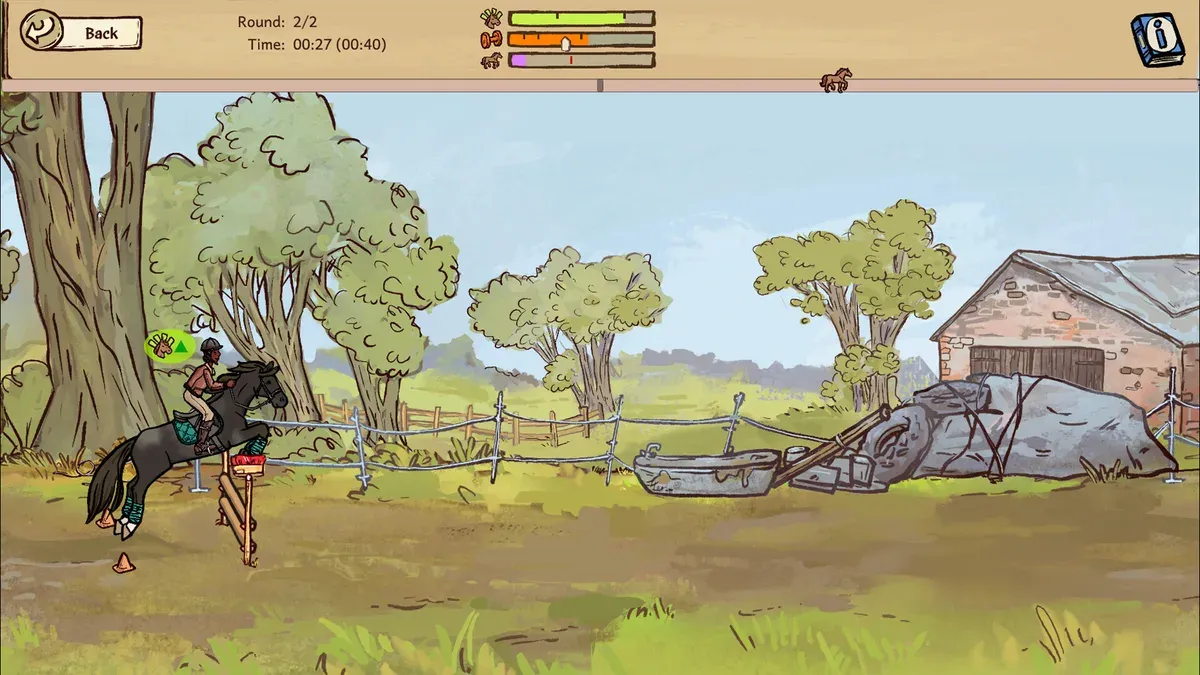
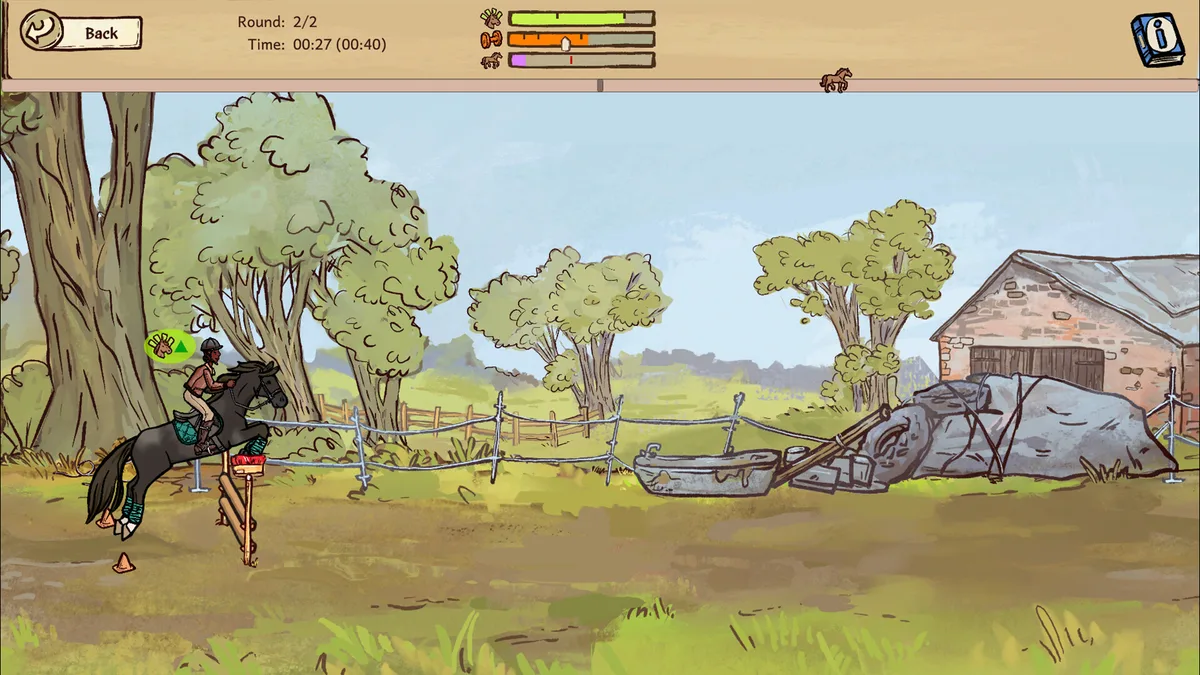
Image: official Steam catalog screenshot. Source: verified Steam listing.
Watch the related YouTube video: Horses of Hoofprint Bay – OUT NOW — thogli studios.
Official launch trailer used as general reference for the full game. It is not a dedicated tutorial, device benchmark, or proof of an individual mechanic.
Start by Understanding Your Horse’s Reactions
A frustrating training session becomes easier to understand when you know which signals deserve attention. This Horses of Hoofprint Bay horse training guide explains how strength, endurance, and confidence fit into preparing your horse for more demanding activities. Start with the central lesson of this Horses of Hoofprint Bay horse training guide: praise curiosity during desensitization, give worried horses space and time, and watch for warnings before unwanted gait changes.
Training involves both developing your horse and responding to its behavior. A confidence exercise has a different purpose from physical preparation, while an unexpected change of pace deserves attention even when your horse already has high confidence.
This guide is based on source review, not firsthand playtesting. It covers the global Steam PC full release, released November 4, 2026, using cited material checked November 5, 2026. The official Horses of Hoofprint Bay Steam listing supports that release information; no numeric patch version is verified.
The available evidence explains the training principles more clearly than the underlying calculations. There is no supported universal schedule, exact session count, or guaranteed shortcut here. Your practical starting point is to identify what needs attention, select relevant training, and respond to the feedback the game provides.
Prepare for Strength, Endurance, and Confidence Training
The first practical step in this horse training guide is to separate physical preparation from confidence work. Official material connects training with developing strength and confidence, while the developer’s cross-country description also emphasizes endurance.
| Training priority | What the sources establish | How to use that information |
|---|---|---|
| Strength | Training develops strength as part of competition preparation | Include physical development when preparing for harder challenges |
| Endurance | Cross-country is described as demanding high endurance alongside strength | Keep endurance in mind when preparing a horse for cross-country |
| Confidence | Desensitization is designed to train confidence | Choose this activity when confidence needs attention |
These priorities are related, but the sources do not establish that one exercise develops every attribute equally. They also do not provide verified gains per session or a complete list of strength and endurance exercises.
Use the exercise descriptions available in your game to decide what to work on. For example, when preparing for cross-country, consider both strength and endurance. When your immediate concern is confidence, desensitization is the specifically documented training activity.
Make Care Part of Preparation
Horse care belongs in your preparation routine. The official description connects brushing and hoof picking with preventing saddle sores and abscesses, and it also calls for appropriate treatment of scrapes and injuries.
| Preparation task | Supported purpose | Practical application |
|---|---|---|
| Grooming and brushing | Help prevent care-related problems such as saddle sores | Attend to grooming before planning demanding activities |
| Hoof picking | Helps prevent abscesses | Include hoof care in your regular routine |
| Treating injuries | Addresses scrapes and other injuries when they occur | Respond to the horse’s care needs |
| Checking available facilities | Building upgrades unlock additional training courses | Review training options as your yard develops |
This is a preparation checklist, not a claim that grooming awards training points. The sources do not establish a direct numerical bonus from completing care tasks before an exercise.
Building progression also matters because advanced facilities open additional courses. However, the cited material does not identify the exact building stage required for each course. Avoid assuming that every training option is available immediately or that a missing option has one particular unlock requirement.
Desensitization: Praise Curiosity and Allow Space for Worry
Desensitization is the clearest documented confidence activity in this horse training guide. Its central task is approaching a frightening object while responding to the horse’s reactions.
The developer’s explanation of confidence and desensitization describes two key responses: reward curiosity with praise, and allow space and time when the horse becomes worried. The launch-day publisher article confirms that desensitization was included among the additions made since the early demo.
| Reaction or situation | Documented response | What to focus on |
|---|---|---|
| Your horse shows curiosity | Offer praise | Match praise to the curious response |
| Your horse becomes worried | Give it space and time | Allow the horse room before continuing the approach |
| You are approaching the object | Watch the horse’s reactions | Let its feedback guide your next action |
The useful distinction is between approaching the object and responding well during that approach. The developer’s description makes the horse’s reactions central to the exercise.
A practical sequence is:
- Begin the desensitization activity when it is available.
- Approach the object while watching the horse’s reaction.
- Praise when the horse shows curiosity.
- Allow space and time when worry appears.
- Continue observing before choosing your next response.
For example, if your horse shows curiosity during an approach, that is the documented opportunity for praise. If its reaction becomes worried, change your response and allow room. This example follows the stated mechanic without assuming an invisible distance threshold or a fixed waiting period.
How Do You Praise the Horse?
The available evidence confirms when to praise, but it does not verify a keyboard key, mouse action, or controller button. Consult the game’s control instructions or tutorial for the input used by your setup.
The developer also explained that confidence progression was being revised from the demo, with balancing still subject to adjustment at that time. Consequently, older claims about quickly maximizing confidence should not become a promised training timetable for the full game.
Use Gait Warnings During Riding
Watching for unwanted gait changes is another practical habit in this horse training guide. The developer describes a warning icon that appears before a horse changes gait without being asked, giving the player an opportunity to correct it before it speeds up or slows down.
That makes the warning useful while you are still developing confidence. You can pay attention to the immediate signal and respond during the ride, even though the horse’s longer-term training remains unfinished.
The cited sources do not identify the exact correction input or how long the warning remains visible. Focus on recognizing the warning and following the game’s control guidance, without relying on an invented timing window.
Why High Confidence Does Not Remove Every Quirk
Personality traits complicate a simple “more confidence fixes everything” explanation. The developer specifically describes traits that can cause some horses to change gait independently even at full confidence.
That means an occasional unwanted gait change does not, by itself, prove that confidence training failed. Consider the horse’s confidence and its individual traits when interpreting the behavior.
A useful way to separate the two kinds of feedback is:
- During desensitization, respond to curiosity or worry.
- During riding, watch for the warning before an unprompted gait change.
- When behavior persists at high confidence, consider the documented possibility of personality quirks.
The sources do not confirm a method for removing those quirks through repeated exercises. Training expectations should leave room for individual horses to behave differently.
Horse Bucking: What Community Reports Actually Suggest
If bucking brought you to this horse training guide, confidence is a reasonable place to investigate. Community reports describe a boarded horse that repeatedly bucked, snorted, and would not jump; replies recommended checking confidence and working on confidence training.
That is player advice, not an official diagnosis. The discussion does not establish that low confidence caused every behavior, and it does not document a guaranteed result after training.
| What to check | Basis in the cited material | Useful next step |
|---|---|---|
| Current confidence | Community replies recommend checking it | Consider confidence training if it needs work |
| Available confidence activity | Official material documents desensitization | Practice responding to curiosity and worry |
| Horse care needs | Official material confirms injuries and care requirements | Address any care issues you identify |
| Unexpected gait changes | Developer guidance describes warnings and personality effects | Watch for warnings and consider individual traits |
| Difficulty using jumping controls | The official FAQ confirms auto-jump accessibility | Consider that option if performing jumps is the difficulty |
The care check is general preparation advice. The sources do not establish that a particular injury causes bucking, so avoid treating it as a diagnosis.
Similarly, auto-jump is an accessibility option for players who struggle with jumping. The official FAQ’s difficulty and accessibility guidance does not describe it as a cure for low confidence or bucking.
The community discussion also suggests looking farther down the training list for confidence training. Treat that as a navigation tip from player experience; it does not verify an exact menu position for every setup.
If you try confidence work, keep the result separate from the recommendation. The report supports investigating confidence, but it does not support promising that a horse will stop bucking after a particular number of sessions. Continue using the game’s feedback to judge what still needs attention.
Horse training guide FAQ
What should I train first?
Start with the need you can identify. This horse training guide recommends desensitization when confidence needs attention, while strength and endurance deserve consideration when preparing for demanding physical challenges such as cross-country.
The sources do not establish a universal best order. Complete relevant care, review your available activities, and choose training that matches your current preparation goal.
How do I praise my horse during desensitization?
Praise when the horse shows curiosity toward the frightening object. When it becomes worried, give it space and time.
The cited material does not verify the praise input, the exact appearance of each reaction indicator, or a required distance from the object. Follow the game’s instructions for controls and use the documented reaction-based approach.
Will confidence training stop my horse from bucking?
Community reports recommend confidence training for a horse described as bucking and refusing jumps. They do not prove that it always works or establish low confidence as the sole cause.
Check confidence and care needs, then evaluate the horse’s response. The documented personality example concerns independent gait changes, so it should not be expanded into an unsupported explanation for every instance of bucking.
How long does training take, and is there a day limit?
The available evidence does not establish a reliable training duration or number of sessions needed to reach a particular result. Pre-release discussion of confidence balancing should not be treated as a current numerical formula.
The official FAQ confirms that the full game has no overall day limit. Horses can eventually retire, however, so unlimited game days do not mean an individual horse remains available indefinitely.
What should you read next?
Return to Training & Lessons or the wiki homepage to choose another topic.
Related Articles
training
Horses of Hoofprint Bay: How to Praise Your Horse
Learn the praise controls, when to reward gait changes, and how to build confidence during desensitization in Horses of Hoofprint Bay.
training
Horses of Hoofprint Bay: Jump Indicator & Takeoff Help
Understand jump markers, strength warnings, riding controls, and gait choices, with full-release guidance and clearly labeled demo tips.
training
Horses of Hoofprint Bay: Jumping Timing, Gaits & Strength
Learn which gaits suit high and wide jumps, how to practice takeoff timing, and when strength or horse potential is causing missed fences.
Was this helpful?
Thanks for the feedback!