
Horses of Hoofprint Bay: Horse Breeding & Genetics
Plan mare and stallion pairings, understand inherited looks and personality, and learn what the breeding station's foal preview confirms.
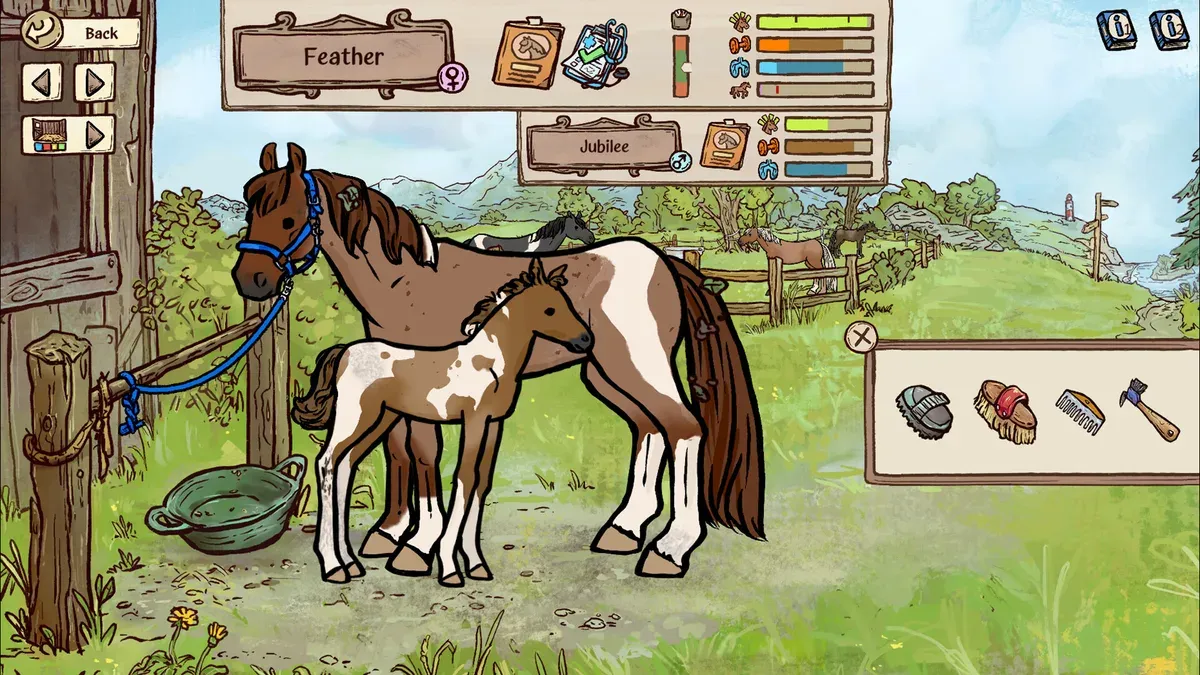
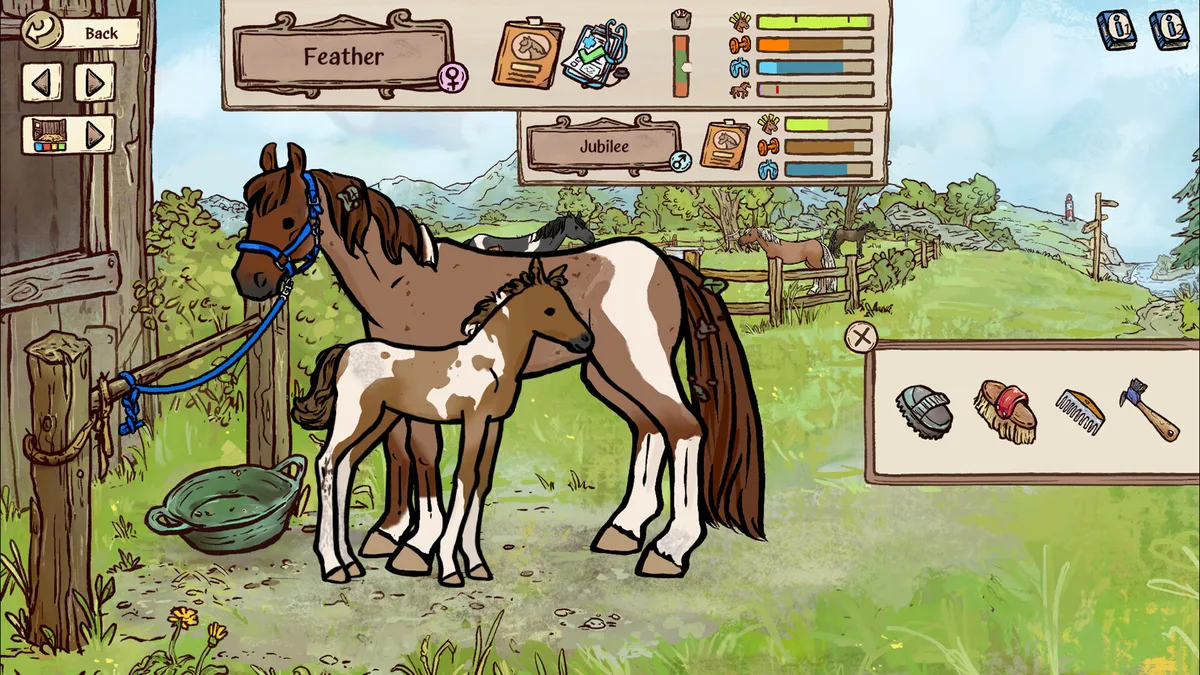
Image: official Steam catalog screenshot. Source: verified Steam listing.
Watch the related YouTube video: Horses of Hoofprint Bay – OUT NOW — thogli studios.
Official launch trailer used as general reference for the full game. It is not a dedicated tutorial, device benchmark, or proof of an individual mechanic.
Start with a clear breeding goal
A beautiful foal is only one possible goal in Horses of Hoofprint Bay horse breeding. Your pairings also matter when you want stronger stock or personality traits that suit the horses you enjoy raising. This Horses of Hoofprint Bay horse breeding guide explains how to assess mares and stallions, understand inherited features, and approach foal previews without assuming an outcome is guaranteed.
The supplied official Horses of Hoofprint Bay Steam listing records a November 4, 2026, PC release. This guide reflects supplied source information checked November 5, 2026; it is based on source review, not firsthand playtesting.
The official description supports three broad breeding priorities: appearance, stats, and personality. Choosing your main priority first gives you a useful basis for comparing prospective parents.
| Breeding priority | What the official description supports | Pairing focus |
|---|---|---|
| Appearance | Foals inherit a combination of parental coloring and white patterns | Consider the appearance of both parents |
| Stats | Planned pairings can help improve your stock over time | Assess the parents with your performance goal in mind |
| Personality | Personality traits can be inherited | Include temperament in your selection criteria |
You can care about all three, but decide which matters most for the next pairing. Otherwise, an attractive coat can distract from the performance or personality goal that prompted you to breed.
For example, selecting parents because you like their markings is a reasonable appearance project. It does not establish that their offspring will have better athletic potential. Evaluate that separately using the information the game provides.
Choose a stallion that fits your mare and your goal
For horse breeding, the stallion is one parent in a pairing whose combined qualities matter. The official description emphasizes planning both sides of that pairing. It does not identify a universally superior stallion or a named horse that every player should use.
Start by reviewing your mare against your chosen goal. Consider which qualities you hope to preserve and which you want to improve. Then assess potential stallions using those same criteria, rather than changing your priorities whenever a striking horse catches your attention.
A practical selection checklist follows directly from the confirmed breeding features:
- Compare appearance on both sides. Coloring and white patterns can come from the parents.
- Review personality information. Inherited traits are part of the breeding system.
- Consider stats separately. Appearance alone does not establish performance potential.
- Consult possible-foal previews when available. Use the breeding station lab to inform your choice.
These are planning recommendations, not a documented breeding formula. The cited material does not explain whether particular stats are averaged, weighted toward one parent, or calculated through another method. A stallion with a desirable quality therefore gives you a reason to consider the pairing, not proof of a specific foal result.
Keep training in mind as well. The official description presents training as a way to develop strength and confidence, while breeding improves stock over time. It does not explain how a parent’s current training values translate into offspring ability.
That distinction matters when comparing horses. A well-trained adult and a promising breeding prospect answer different questions, and the sources do not provide a numerical rule for converting one into the other.
Understand inherited appearance and personality
The clearest confirmed inheritance information concerns coloring, white patterns, and personality traits. Foals can receive a combination of these parental characteristics, but the official description does not publish a detailed inheritance chart.
In horse breeding, separate what can be inherited from what you can predict with certainty.
| Characteristic | Confirmed information | Information the available evidence does not establish |
|---|---|---|
| Coloring | Parental coloring contributes to offspring appearance | Exact color probabilities or allele combinations |
| White patterns | Foals can inherit parental pattern characteristics | A guaranteed method for reproducing a specific pattern |
| Personality | Personality traits can pass to offspring | Exact inheritance rates or guaranteed trait combinations |
| Stats | Breeding is intended to help improve stock | A numerical formula for offspring potential |
This gives you a useful direction without promising an exact copy of either parent. If a particular appearance is your priority, evaluate the parents and any available preview together. Keep the distinction between a possible result and a guaranteed result clear.
What the references say about color genetics
Community reports in the supplied genotype-testing discussion state that the game does not use realistic coat-color genetics. Treat that as community-sourced context: the excerpt does not provide an independently verified technical explanation of the breeding system.
The practical implication is to avoid importing real-world genetic calculators or inheritance percentages into your planning. The official store confirms inherited appearance, but it does not establish that real-world genotype rules produce reliable predictions here.
The same community discussion mentions testing certain personality traits. However, the supplied launch description does not establish that testing feature’s exact scope, access requirements, or results. It would be premature to build a detailed testing walkthrough from that comment.
Personality deserves its own comparison
The official listing confirms personality inheritance. An earlier developer update described traits affecting tendencies such as cleanliness, injury susceptibility, and unprompted gait changes. Those examples come from development material, so they should not be treated as a complete, verified launch trait list.
What remains useful is the selection principle: personality can influence which horses you prefer to raise. Give it a separate place in your comparison instead of treating coat appearance as the whole breeding decision.
Use the breeding station preview carefully
The breeding station lab is the most directly relevant upgrade described for horse breeding. The official listing says this advanced facility lets you preview possible foals and sell more stud services.
That confirms a planning tool, but leaves several important details unspecified.
| Lab-related question | What the supplied official description establishes |
|---|---|
| Can it preview foals? | Yes, it can show possible foals |
| Is it associated with building progression? | Yes, the lab appears among advanced building features |
| Does it support stud services? | Yes, the description connects it with selling more services |
| Does a preview guarantee the resulting foal? | No guarantee is stated |
| Are exact unlock costs and probabilities documented? | They are not provided in the cited material |
Use a preview to assess whether the possibilities fit your breeding goal. For an appearance project, that means considering the possible foals shown alongside the parents’ coloring and patterns. For a performance project, assess whatever relevant information the game actually supplies.
Avoid reading extra precision into a preview. The references do not explain whether it presents every possible outcome, a selection of examples, or numerical odds. They also do not establish that viewing a foal lets you select that exact result.
The stud-service feature is similarly broad. Its existence is confirmed, but the available evidence does not provide a pricing formula, customer-demand system, or guaranteed income figure.
When deciding whether to pursue the lab upgrade, its confirmed value is access to possible-foal previews and expanded stud-service opportunities. The material does not support calculating an exact financial return or prescribing a specific upgrade order.
Build a herd you can support
horse breeding sits within a larger stable-management system. The official description connects herd growth with building upgrades, care, and staff support. Planning a pairing therefore includes considering how another horse fits into your yard.
The following checks are recommendations based on those confirmed management features.
| Management consideration | Confirmed feature | Practical planning check |
|---|---|---|
| Space | Building upgrades create room for more horses | Review your available capacity before expanding |
| Daily care | Horses require grooming and appropriate injury treatment | Consider the care demands of a larger herd |
| Staff | Hired staff can assist with care and training | Review staffing as your workload increases |
| Training | Exercises develop strength and confidence | Leave room in your plans for developing horses |
| Long-term continuity | Horses eventually retire | Consider how your breeding stock will change over time |
Review the stable capacity guide before expanding. It separates the publisher’s 20-horse upgraded-stable figure, additional paid boarding and the less certain yearling-paddock limit, with the dates and scope of each source.
The official FAQ also explains that horse ages are measured in in-game days, or turns. Do not interpret an age value as real-world years or months, then use real-world reproductive timelines to fill in missing mechanics.
Retirement matters because retired horses are effectively removed from play. The sources do not establish a specific retirement age or ideal age for a first pairing. Keep those unknowns separate from the confirmed need to think beyond your current horses.
Care remains important throughout herd growth. The FAQ says neglected horses can be taken away by animal welfare, making them unavailable. Maintaining a manageable herd protects the horses you already have while you develop future stock.
For a sustainable horse breeding plan, use a simple sequence: define the next pairing’s purpose, compare both parents, review available preview information, and check whether your facilities and care arrangements can support expansion.
This sequence is a planning framework drawn from the documented features. It is not a claim about required menu steps, pregnancy triggers, or a hidden breeding efficiency bonus.
How long do pregnancy and foal growth take?
The Breeding handbook visible in Rohara’s full-release recording gives a concrete schedule: pregnancy lasts eight in-game days, the foal becomes a yearling four days after birth, and adulthood begins at age 12. That is about 20 in-game days from the start of pregnancy to adulthood.
The mare can work normally during the first half of pregnancy. Riding is unavailable during the second half; lunging remains possible but provides no strength or endurance gains then. A nursing mare can be bred again. Use the foal growth timeline for the complete schedule and housing considerations.
Horse breeding FAQ
How does horse breeding work?
The official description centers on planned mare-and-stallion pairings that can improve stock over time. Foals inherit combinations of parental coloring, white patterns, and personality traits. Breeding for stats is also supported, but the cited sources do not provide an exact offspring-stat formula or inheritance percentages.
What should I look for in a stallion?
Choose according to the goal you established for the pairing. Compare the stallion’s appearance, personality information, and relevant stats alongside your mare’s qualities. The references do not identify a best stallion, guaranteed winning combination, or rule that makes one parent responsible for all desirable offspring characteristics.
Does the breeding station let you choose an exact foal?
The official listing confirms previews of possible foals. It does not say that you can select a previewed foal as the guaranteed outcome, nor does it explain the probability behind each preview. Use the feature to inform a pairing while keeping its documented limits in mind.
How long does pregnancy take, and is there a campaign deadline?
Pregnancy takes eight in-game days in the full-release handbook. Foals become yearlings four days after birth and adults at age 12. The official FAQ confirms that the full game has no overall day limit, although individual horses eventually retire. The growth guide explains the schedule and its sources.
What should you read next?
- Horse Care & Grooming Guide
- Foal Growth & Age Milestones
- Horse Personality Traits Explained
- Horse Coats, Patterns & Colors
Return to Horses & Breeding or the wiki homepage to choose another topic.
Related Articles
guides
Horses of Hoofprint Bay: Steam Achievements Guide
Plan Horses of Hoofprint Bay achievement goals across breeding, training and competition wins. Find confirmed milestones and help with disabled achievements.
horses
Horses of Hoofprint Bay: Foal Growth & Age Milestones
Foals become yearlings in 4 in-game days and adults at age 12. Plan pregnancy, mare training, and stable space with the full-release timeline.
horses
Horses of Hoofprint Bay: Foal Training & Daily Care
Learn Horses of Hoofprint Bay foal training, the age-12 adult milestone, mare-and-foal walks, and how to manage daily exercise.
Was this helpful?
Thanks for the feedback!