
Horses of Hoofprint Bay: Riding Lessons & Correct Posture
Master Horses of Hoofprint Bay riding lessons with posture cues, correction tips, horse care advice, and guidance on older demo reports.
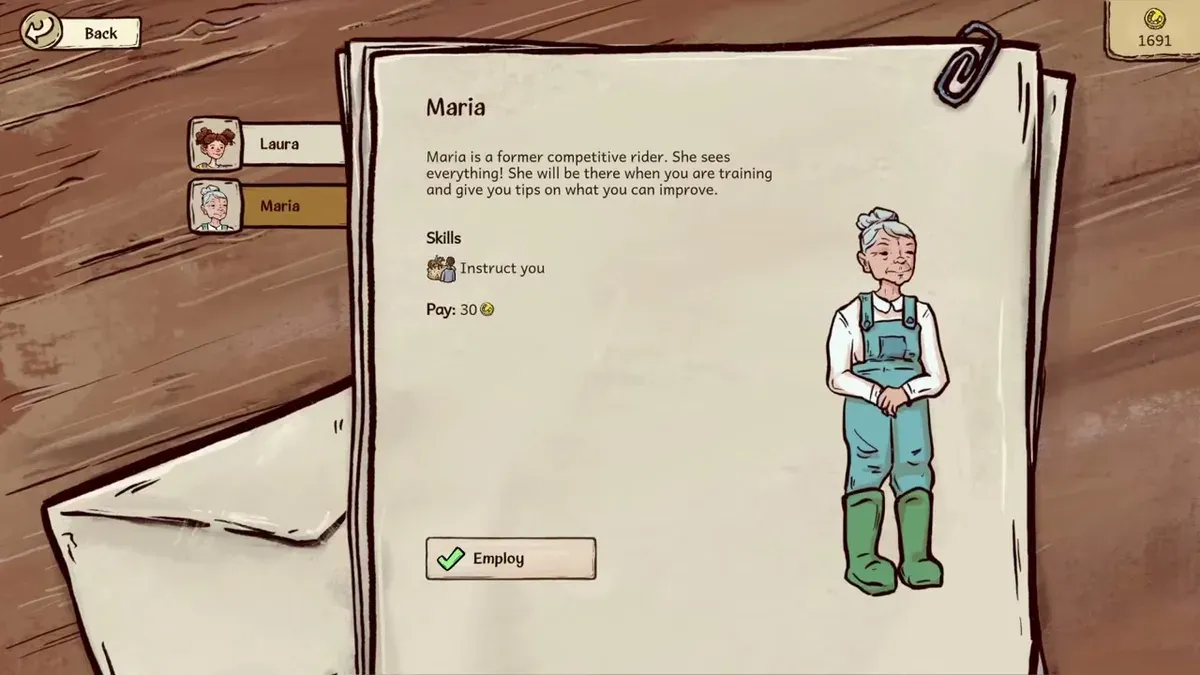
How riding lessons work
Horses of Hoofprint Bay riding lessons become easier to read when you know exactly where to look. You teach NPC students by identifying posture mistakes and applying the matching correction, making visual recognition central to the activity. To improve at Horses of Hoofprint Bay riding lessons, learn the rider’s neutral position, correct the body part that has moved out of place, and practice with beginners before tackling subtler mistakes.
This guide covers the global Steam full release, which launched November 4, 2026, with evidence checked November 5. The official Horses of Hoofprint Bay Steam page provides the release listing.
The in-game Giving Lessons handbook, visible in Rohara’s full-release recording, explains the difficulty progression: beginners make more obvious mistakes and give you more time to respond. Advanced students make smaller errors that require quicker corrections.
That makes beginner lessons useful for learning both recognition and controls. If you are still deciding whether a leg is too far forward or backward, additional practice at the easier level gives you a more forgiving setting to learn the difference.
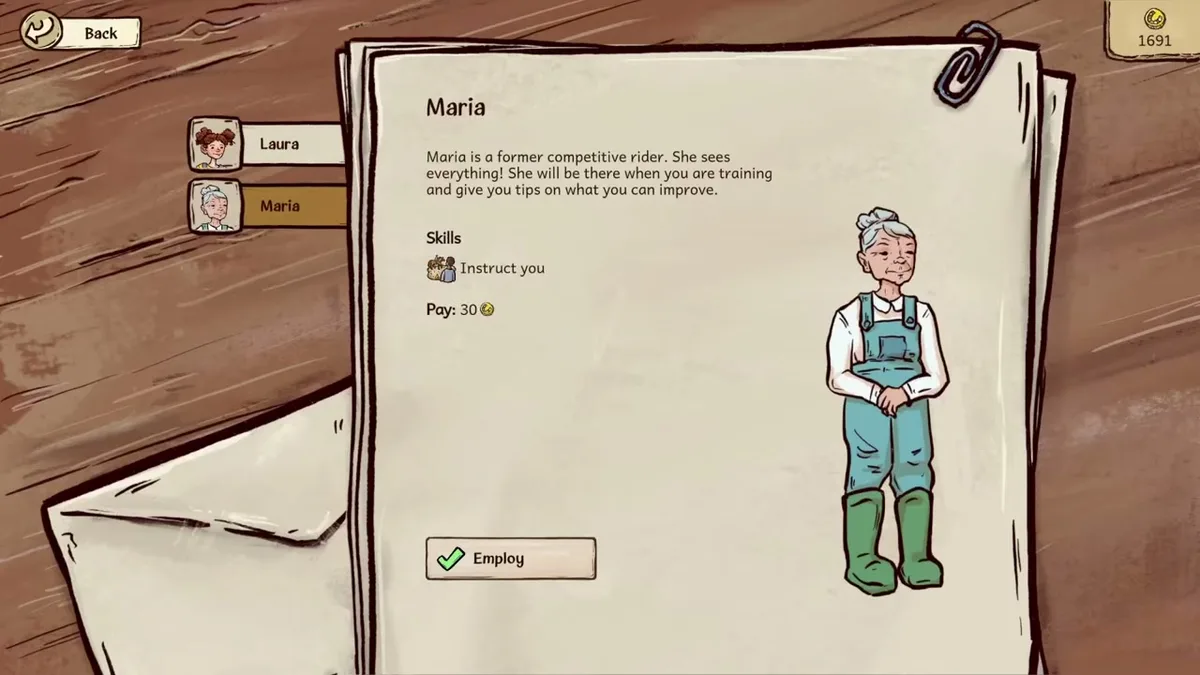
Unaltered gameplay still from JayPlays’ full-release video. General visual context, not proof of an undocumented mechanic. Image source.
Full-release gameplay and in-game handbook: Horses of Hoofprint Bay FULL RELEASE! Starting Our Horse Stable! 🐎 — Rohara, November 4, 2026. English-language reference footage. Specific handbook claims link to their observed timestamps; other uses are general game reference, not a device benchmark or proof of a bug fix.
Riding lessons: posture corrections
The handbook’s neutral posture gives you two main reference lines:
- Body alignment: The head, shoulder, hip, and heel should align vertically.
- Arm and rein alignment: The elbow, hand, and reins should form a straight line toward the horse’s mouth.
Use these relationships to judge the rider’s current position. Trying to remember exactly how far a hand or foot moved adds another task while the horse is already moving.
The handbook’s illustrated correction examples show these specific adjustments:
| Visible mistake | Matching correction | What to check afterward |
|---|---|---|
| Hands are too low | Raise the hands | Compare the elbow, hand, and rein alignment |
| Legs are too far back | Move the legs forward | Compare the heel with the rider’s vertical body alignment |
| Legs are too far forward | Move the legs back | Check whether the legs have returned to neutral |
A useful practice routine is to check the body alignment, then the legs, then the hands. This is a suggested observation order, not a required sequence or hidden scoring rule. Keeping the order consistent can help you avoid staring at one detail while overlooking another.
For example, suppose the rider’s legs have slipped backward while the hands still match the handbook illustration. Move the legs forward, then reassess. There is no reason to add a hand correction when the hands are already in position.
The same principle applies after any input: compare the result with neutral posture before choosing another adjustment. Repeatedly pressing every correction key does not help you identify which part was wrong.
Practice this visual check before increasing the difficulty of your riding lessons. The aim is to recognize the correct shape quickly enough that choosing the matching control becomes straightforward.
Improve your results without relying on a correction quota
For riding lessons, build your approach around recognizing mistakes and responding accurately. A fixed minimum number of successful corrections is unconfirmed for the full release, so there is no supported universal target such as four or five corrections per round.
A November 3 demo discussion about lesson results includes a player who received feedback about insufficient corrections despite making adjustments. Replies describe personal correction counts and visual reference points. Those are community reports, not a verified launch scoring formula.
If you encounter similar feedback, work through the parts you can control:
- Review the handbook’s neutral posture before another attempt.
- Choose a beginner lesson while learning to recognize errors.
- Identify the misplaced body part before selecting its correction.
- Recheck the rider after the adjustment.
- Continue watching for new mistakes throughout the lesson.
This routine follows the handbook’s emphasis on posture and the extra response time available with beginners. It does not guarantee a particular grade, but it gives each input a clear purpose.
Players also offered practical visibility and control tips in a February–March demo discussion about difficult lesson corrections:
| Difficulty | Player experience from demo discussions | How to use the suggestion |
|---|---|---|
| The student looks too small | Players recommended zooming closer | Check whether your current view offers a useful zoom adjustment |
| Correction buttons are difficult to manage | Players suggested rebinding controls | Review your bindings and choose a layout you can remember |
| Leg position is hard to judge | Players compared the toes with the front of the girth | Treat this as a secondary visual cue alongside the handbook alignment |
| Hand position is hard to judge | Players watched the mane and the hand-to-rein angle | Prioritize the handbook’s elbow-to-mouth line when cues seem inconsistent |
These suggestions are player experience from demo builds. The current handbook remains the stronger reference for the intended posture.
Older replies also recommended making a wrong correction and immediately reversing it. That behavior was reported by players; it is not an established strategy for excellent results in the release version. Correct the mistake you can actually identify, and use the next attempt to improve recognition when you are uncertain.
Keep your lesson horse ready for work
Planning riding lessons also means looking after the horse doing the work. The in-game Horse Stats & Training handbook states that lesson horses require corrective training, so include that need when planning their activities.
The training handbook shown in Rohara’s recording also explains the exercise bar. It represents work already used that day. Crossing its red threshold causes exhaustion the following day, while greater endurance allows more daily exercise.
| Mechanic | Current handbook guidance | Practical planning implication |
|---|---|---|
| Exercise bar | Tracks work used during the day | Check accumulated work before adding activities |
| Red threshold | Exceeding it causes next-day exhaustion | Avoid pushing a horse beyond the threshold |
| Endurance | Higher endurance permits more daily exercise | Plan around each horse’s capacity |
| Lesson work | Lesson horses need corrective training | Leave room for that training in your schedule |
| Body condition | Work reduces weight; grain restores it | Monitor condition as workload changes |
A practical routine is to inspect the horse’s exercise use before a lesson, check it again afterward, and decide whether additional training fits within its capacity. Avoid assuming that a horse can comfortably complete every activity simply because the activities serve different purposes.
The handbook also notes that insufficient exercise can produce an explosive state, while spending the night in a field contributes some exercise. Your schedule therefore needs to account for both excessive work and too little activity.
Body condition adds another consideration. In the game, heavy workload can reduce weight, while grain helps restore it. Very low condition can lead to malnourishment, and excessive condition can lead to overweight problems and laminitis. Watch the horse’s condition rather than increasing feed automatically.
The handbook confirms the need for corrective training but does not establish an exact per-lesson stat penalty in the verified observations. Avoid budgeting around an assumed fixed loss of strength or endurance.
Other ways to earn money between lessons
If riding lessons are frustrating, boarding offers another income activity with different responsibilities. The current How to Make Money handbook describes accepting clients through the Main House office, with horses staying for several days under an owner’s contract.
The boarding handbook visible in the release recording distinguishes three arrangements:
| Boarding arrangement | Your responsibilities | What to consider before accepting |
|---|---|---|
| Part board | Provide hay or pasture | Whether you can meet the horse’s feeding requirements |
| Full board | Feed and brush daily, and monitor medical needs | Whether your daily care routine can cover the extra horse |
| Schooling | Provide care and achieve training goals before the stay ends | Whether the required training fits the available time |
For full board, the owner exercises the horse. The handbook also calls for accounting for grain needs, so assess the entire care contract rather than assuming every boarded horse follows your own horses’ routine.
Schooling adds a deadline and a training target. Before accepting, consider whether you can complete that goal while respecting the horse’s exercise capacity. This gives you a concrete way to judge a contract without relying on an unsupported claim that one boarding category always pays best.
Competitions provide another route to prize money, as described on the official Steam page. However, February demo players’ reports of easily funding their stable through competitions should not be treated as a promise about release progression or profitability.
Choose activities according to your horses’ readiness and the work you can reliably complete. Boarding contracts and competition opportunities give you options when you want to spend less time correcting students.
FAQ
How many corrections do riding lessons require?
A universal minimum is unconfirmed for the full release. Demo players shared personal correction counts, but those figures do not establish a current passing threshold. Use the handbook’s posture references, choose the matching adjustment, and keep watching for subsequent mistakes. Beginner students offer more obvious errors and more response time while you learn.
Which buttons should I press to correct the rider?
Use the control assigned to the specific adjustment: raise hands when they are too low, move legs forward when they are too far back, and move legs backward when they are too far forward. Exact default key assignments are not established by the verified handbook observations here. Check your current bindings; demo players reported using rebinding to make the controls easier to manage.
Can I earn money without regularly giving lessons?
Yes. The release handbook describes boarding contracts, and the official store describes competition prize money. These provide other income routes, although that does not establish that every lesson-related quest can be skipped. Part board, full board, and schooling have different responsibilities, so read the owner’s contract before accepting a horse.
Why does starting a riding lesson produce a gray or black screen?
The February lesson startup discussion concerned demo-era reports on Linux and Windows. A community reply associated the problem with fresh v0.1.8 demo installations, and later replies reported a fix. That history does not identify the cause of a similar problem in the November release. If it happens now, include your current version, operating system, and the point where the lesson stops when reporting it.
What should you read next?
Return to Training & Lessons or the wiki homepage to choose another topic.
Related Articles
training
Horses of Hoofprint Bay: Horse Training & Confidence Guide
Build strength, endurance, and confidence with practical guidance on desensitization, praise, gait warnings, and community reports about bucking.
training
Horses of Hoofprint Bay: How to Praise Your Horse
Learn the praise controls, when to reward gait changes, and how to build confidence during desensitization in Horses of Hoofprint Bay.
training
Horses of Hoofprint Bay: Jump Indicator & Takeoff Help
Understand jump markers, strength warnings, riding controls, and gait choices, with full-release guidance and clearly labeled demo tips.
Was this helpful?
Thanks for the feedback!